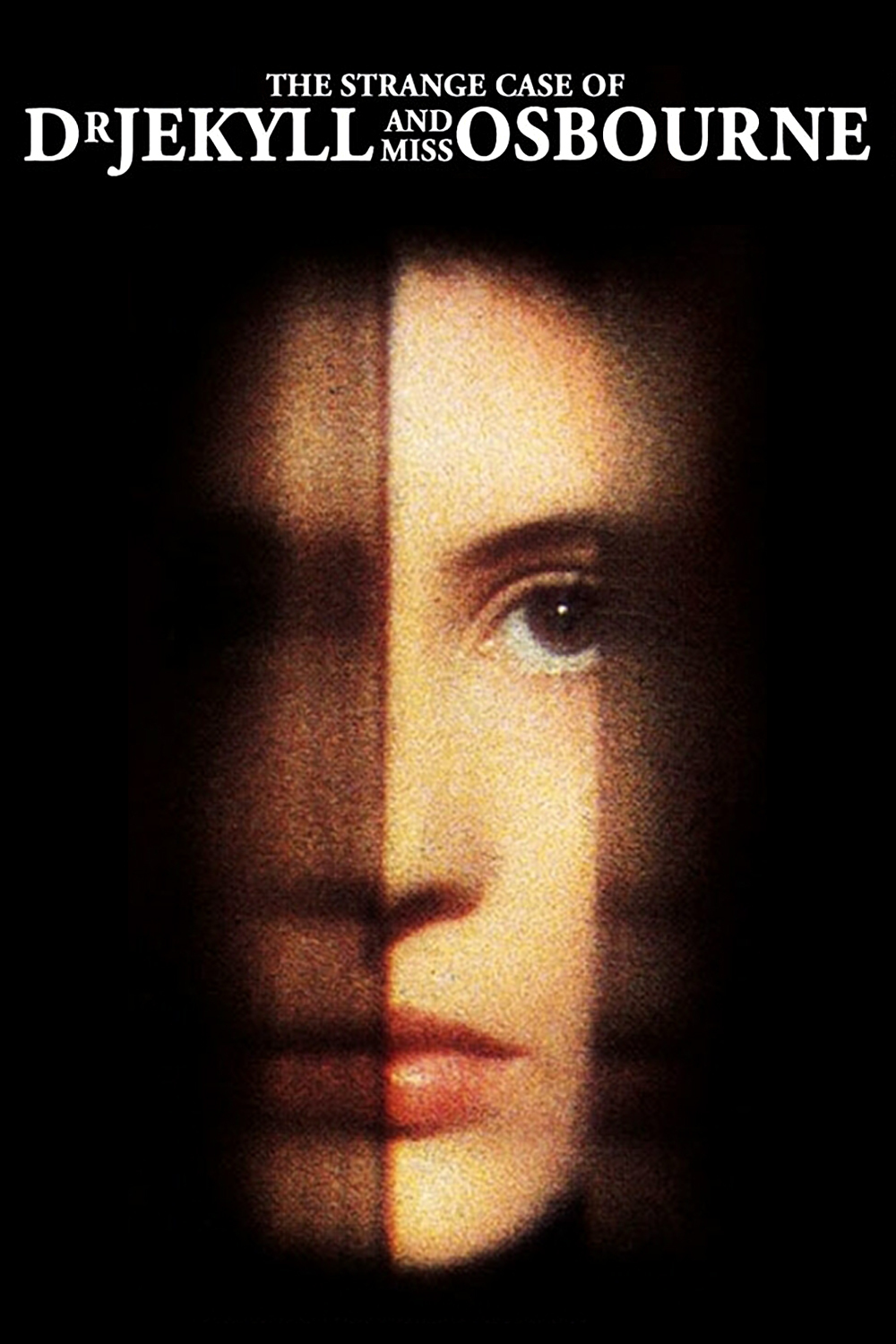
31 Days of Horror: The Strange Case of Dr. Jekyll And Miss Osbourne (1981)

jekyll

I’ve recently watched several adaptations of the Dr. Jekyll and Mr. Hyde story and this is by far the strangest and most interesting, and not just because it is much more explicit in its violence and sex than the other films were even allowed to be.

Director Walerian Borowczyk seems to understand that we all know the story already and he uses that familiarity to flip the table on it. Excepting a short, shocking introduction the entire film takes place in a house, Dr. Jekyll’s house. He’s having a party celebrating his engagement with Miss Osbourne. The cream of society is there. An elderly woman plays piano while a young girl does a ballerina dance.

It is a nice party. Until it isn’t. Udo Kier plays Hyde as an ID unleashed. While the other adaptations I’ve seen merely hint at his sexuality Borowczyk allows him to go all in. That dancing girl? Hyde rapes her to death. He does the same to a man-servant. His giant, red member is exposed as the music does a horror sting. He commits violence with glee. But it is not just Hyde who is unleashed. When he ties up a stodgy Colonel, the old man’s daughter pulls down her top and lifts up her skirt. She literally begs Hyde to have his way with her while her father watches. Somehow by watching Hyde live out his every fantasy she’s able to toss off all the shackles of respectability and repression.

Though Hyde has raped and murdered several people, the men deem it necessary to not only lock the women up in their rooms but to drug them so that they will sleep through the night. Somehow it is better for them to not be frightened by the ordeal than to stay awake and be able to fight for their lives. Victorian mores must be kept up, even when life and death is literally on the line.

The film gives us a very little story. We watch the guests come in and sign the engagement book. They have dinner and there is a sprinkling of conversation about Dr. Jekyll and his theories of transcendental science. There is the dance and then the rest of the film is Hyde unleashing his own brand of hell.

Borowczyk and cinematographer Noël Véry shoot the film with soft lighting and a soft focus giving it a dreamlike (or nightmarish) feel. It is very beautiful looking even when extreme acts of violence are happening. The score is very modern as well, filled with droning sounds that only add to the nightmare.

It is not a film for the faint of heart. It is very strange, and pretty extreme at times. It was fascinating to me to watch it having just seen a few of the older versions of the story which is maybe why I kind of loved it.

31 Days of Horror: Eyes of Laura Mars (1978)

eyes of laura mars

As my silly little Garcia Poster note indicated I watched Eyes of Laura Mars today. It is kind of an American take on the Italian Giallo with Faye Dunaway playing a photographer who suddenly gets visions through a killer’s eyes. The murderes are all of her friends whom she gets to watch get stabbed to death while the deed is happening.

Tommy Lee Jones is the detective solving the case. It is based on a story written by John Carpenter and was directed by the guy who did The Empire Strikes Back. It is full of lush, soft photography of half-naked women (Faye’s specialty is of beautiful women in their underwear murdering handsome men in tuxes). It is all pretty silly and a little trashy and kind of awesome. I’ll have a full review up soon.

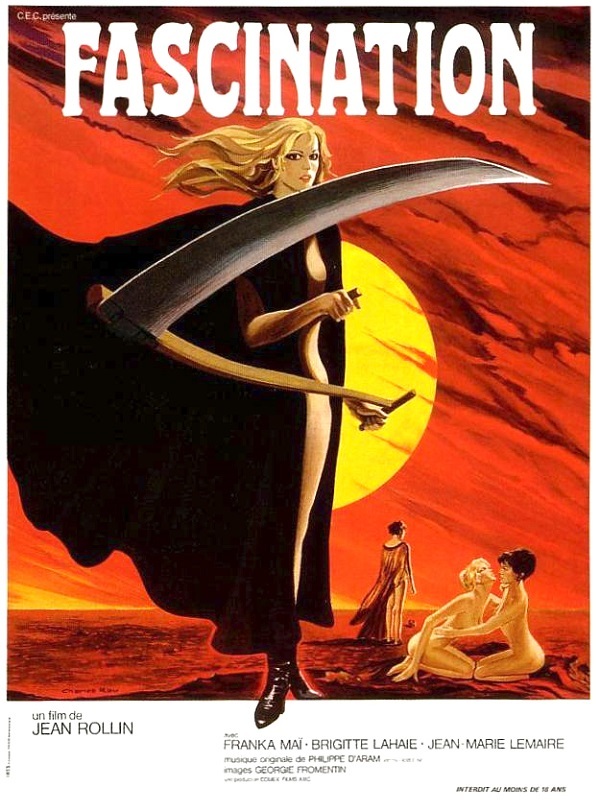
31 Days of Horror: Fascination (1979)

fascination movie poster

French director Jean Rollin is somebody whose name I’ve known for years, but whose films I had never sat down and watched until today. He made a lot of movies in his career but is probably best known for a series of erotic vampire films he made in the 1970s. Fascination is probably his best-known movie.

It is about a man who flees from his fellow villainous compatriots with a bag full of stolen gold. He winds up in a creaky, old, castle where he plans to hide out until the cover of darkness. There he meets two beautiful women clad in flowing white gowns.

Though he has a gun and speaks as if he’s willing to use it the women do not seem afraid. They taunt him and speak elliptically about further friends coming that evening and something sinister happening at midnight. The man doesn’t understand but is attracted to them and so he stays.

More women in flowing gowns arrive and they too play games with the man. I’ve already noted that Rollin is known for his erotic vampire films so you can probably guess where this film is going, though it may actually surprise you.

The film uses the castle, and those flowing gowns, to great effects. This is more a mood piece than a particularly violent horror film. It takes its time getting to where it’s going but it is mesmerizing just the same. Well worth a watch if you enjoy gothic horror and beautiful vampires.

31 Days of Horror: Hellbound: Hellraiser II (1988)

hellbound hellraiser 2 poster

I have to admit I’m not a very big fan of the first film in this franchise. As I’ve gotten older my tolerance for gore has lessened. There was a time when I would seek out and watch all of the most violent, most depraved films ever put to celluloid. But that time has passed. I’m much more interested in horror films that tell an interesting story, or that prefer mood and vibe over constant bloodshed.

Hellraiser was all about the copious blood flow and the ripped flesh. I can see the appeal in that, and I still appreciate the effects, but it just didn’t do it for me. Which is probably why I’ve kept putting off watching any of the sequels.

For the first chunk of this film, I was restless. There is a lot of gore, and very little else. I can see the skinless woman and appreciate the detail of the effects and wonder how long it took that poor actress to get into costume, but really I just wanted the film to move on. 

But somewhere in the back end, I started to really enjoy myself. About the time the creature with the snakes for arms with the creepy face-things wielding blades for hands, sprouted a finger that gave us a “come here” gesture I realized I was totally on board. The story is mostly nonsense, but the maze set design is really gnarly and the film isn’t afraid to not be taken seriously. It isn’t jokey, not at all, but moments like the aforementioned finger give the audience a little wind. The filmmakers were clearly having fun creating all of these bizarre, and yes gore-filled images. 

So was I.

The Friday Night Horror Movie: Thirst (2009)

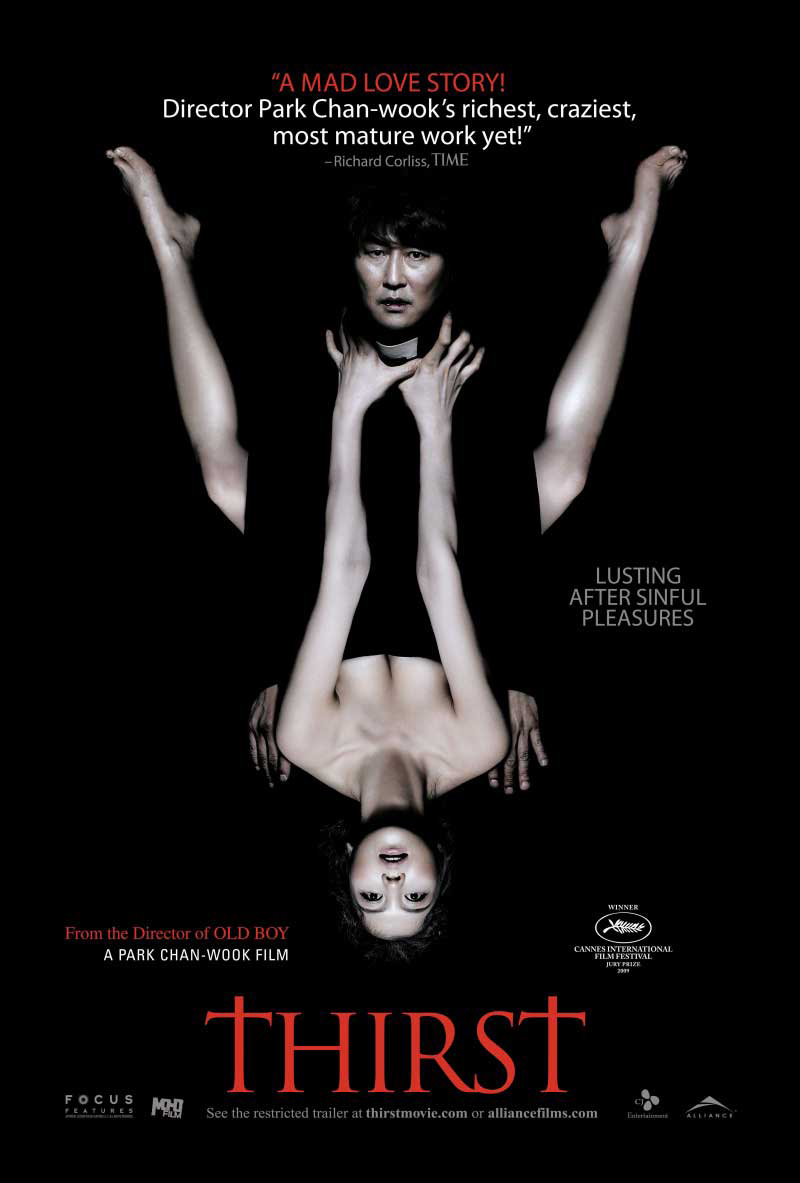
thirst movie poster
My Letterboxd profile says that I watched this movie once before, but I have absolutely no memory of it. I’m about halfway through the film right now and nothing has rung a bell. I don’t know if I just logged it wrong (maybe I watched something else and thought it was this, or just accidentally logged it) or if my memory is just that faulty. But I’m glad I decided to watch it again because I love it so far.

Directed by the always fantastic Park Chan-wook, thirst is a vampire movie, and so much more. It stars Song Kang-ho as a priest who volunteers to take an experimental vaccine for a deadly disease. The trouble is he doesn’t actually have the condition so he also volunteers to get it.

It kills him and then turns him into a vampire. A Catholic priest vampire is such a cool idea that I’m surprised no one has thought of it before. His morals keep him from outright killing people so he finds creative ways to quelch his blood lust (volunteering at a hospital he sucks on the other end of an IV out of a comatose patient for starters).

He meets a woman (played by Kim Ok-vin) who is very unhappy and is also into a bit of masochism. The two form quite a pair and that’s about as far as I’ve gotten into the plot.

Chan-wood injects all of this with his usual visual flair and perverse sense of humor. My wife especially appreciated when a sick man is playing a flute and then vomits up a bucket of blood (I’m just kidding, she just happened to be walking by during that scene and cursed my name for letting her see it, then quickly ran away).

And now I must get back to watching it.

31 Days of Horror: The Haunted Palace (1963)

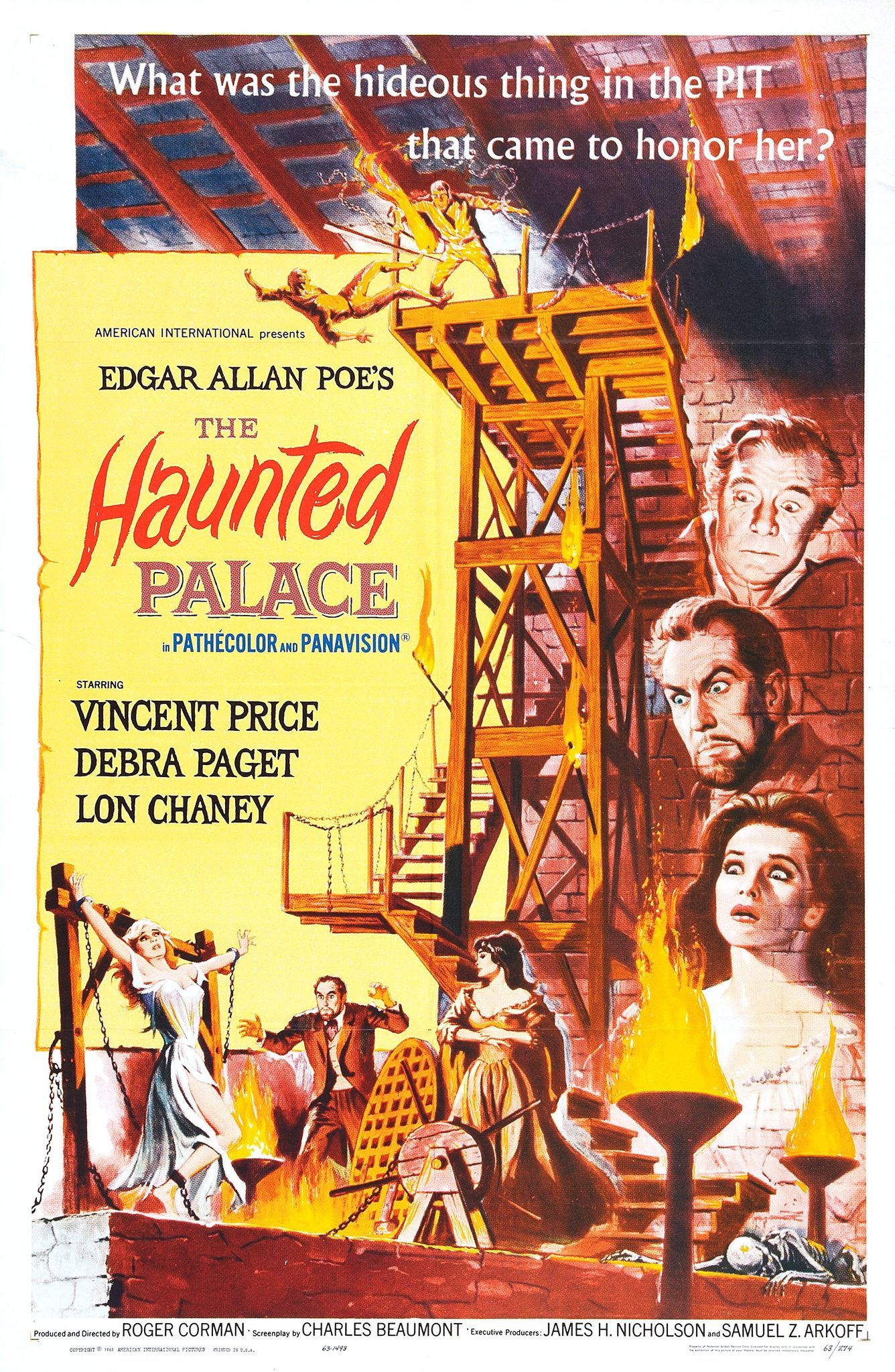
the haunted palace

In 1960 Roger Corman found great success by adapting an Egar Allen Poe story into the film House of Usher. For the next several years he made a number of other films loosely based on Poe stories. The Haunted Palace takes its name from a Poe poem which can be found in The Fall of the House of Usher but the plot is actually adapted from H.P.Lovecraft’s short story The Case of Charles Dexter Ward, but it has all the hallmarks of Corman’s other Poe adaptations.

Vincent Price stars as Charles Dexter Ward a man who inherits an old castle in Arkham, MA. Upon arrival in the town, he and his wife Anne (Debra Paget in her final film role) are not welcome there. It seems the good Charles’s ancestor was mixed up in witchcraft some hundred years prior. The townspeople back then burned him at the stake, but not before he laid a curse on the town.

The town has been plagued with an abundance of deformities in their children and they believe this is due to the curse. Undeterred, Charles moves into the castle in order to fix it up and sell it. But soon enough he falls under his ancestor’s spell and with the help of a couple of henchmen (including Lon Chaney, Jr.) he begins some good old-fashioned revenge.

I love this stuff. Over the last few years, I’ve become a huge fan of Hammer Horror films and Corman obviously took a page out of their book for this film (and many others). Though it was made on a tiny budget it looks great. The sets are beautiful, and the lighting is gorgeous. Vincent Price is brilliant as ever. The story is a bit ridiculous, but it doesn’t matter because it is so much fun.

31 Days of Horror: The Mummy’s Hand (1940)

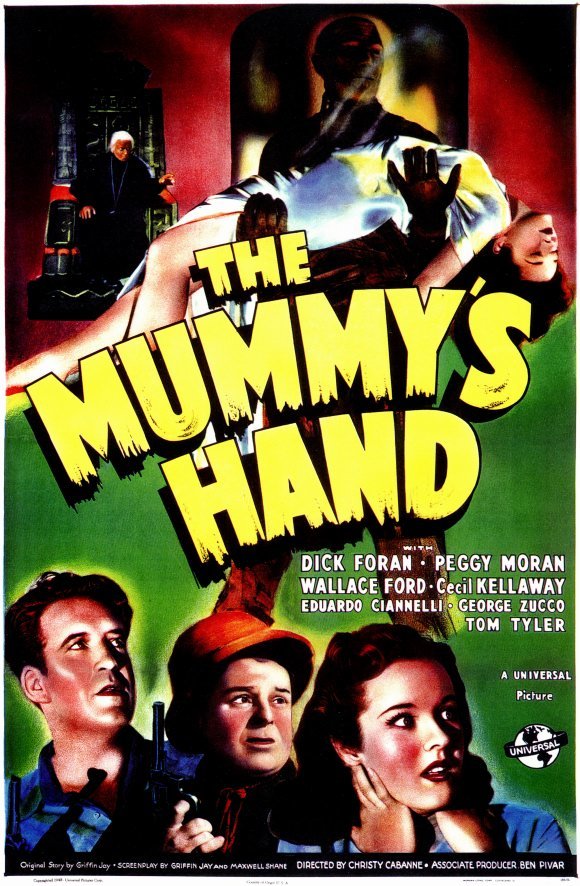
the mummys hand
The Mummy (1932) is probably my least favorite of the classic Universal Horror films. Frankly, it is a bit dull and the Mummy doesn’t have nearly enough screen time. But it does contain some great set work and a wonderful performance from Zita Johann. This is probably why I’ve never bothered with any of the sequels…until now

The Mummy’s Hand takes the worst parts of the original and adds in some corny comic relief. Dick Foran and Wallace Ford, doing their best Abbott and Costello impressions play an archeologist and his trusty sidekick, both down on their luck. A broken vase they buy in an open-air market leads them on an expedition funded by a silly magician (Cecil Kellaway) and his daughter (Peggy Moran).

After a lot of plot, they eventually find the Mummy’s tomb. Some high priest or some-such thing feeds the Mummy some tea leaves and puts him under his control. Or something. My attention was waning at this point.

It isn’t a terrible film. The Mummy’s design is good, and some of the comedy is actually pretty funny. It’s just that the film feels so very slight. Its runtime is just 66 minutes and the Mummy doesn’t show up until about 40 minutes in, so there is a lot of filler. It had a tiny budget and pretty much no one involved with the original had anything to do with this sequel, so you can’t blame it for not being amazing.

31 Days of Horror: Happy Death Day 2U (2019)

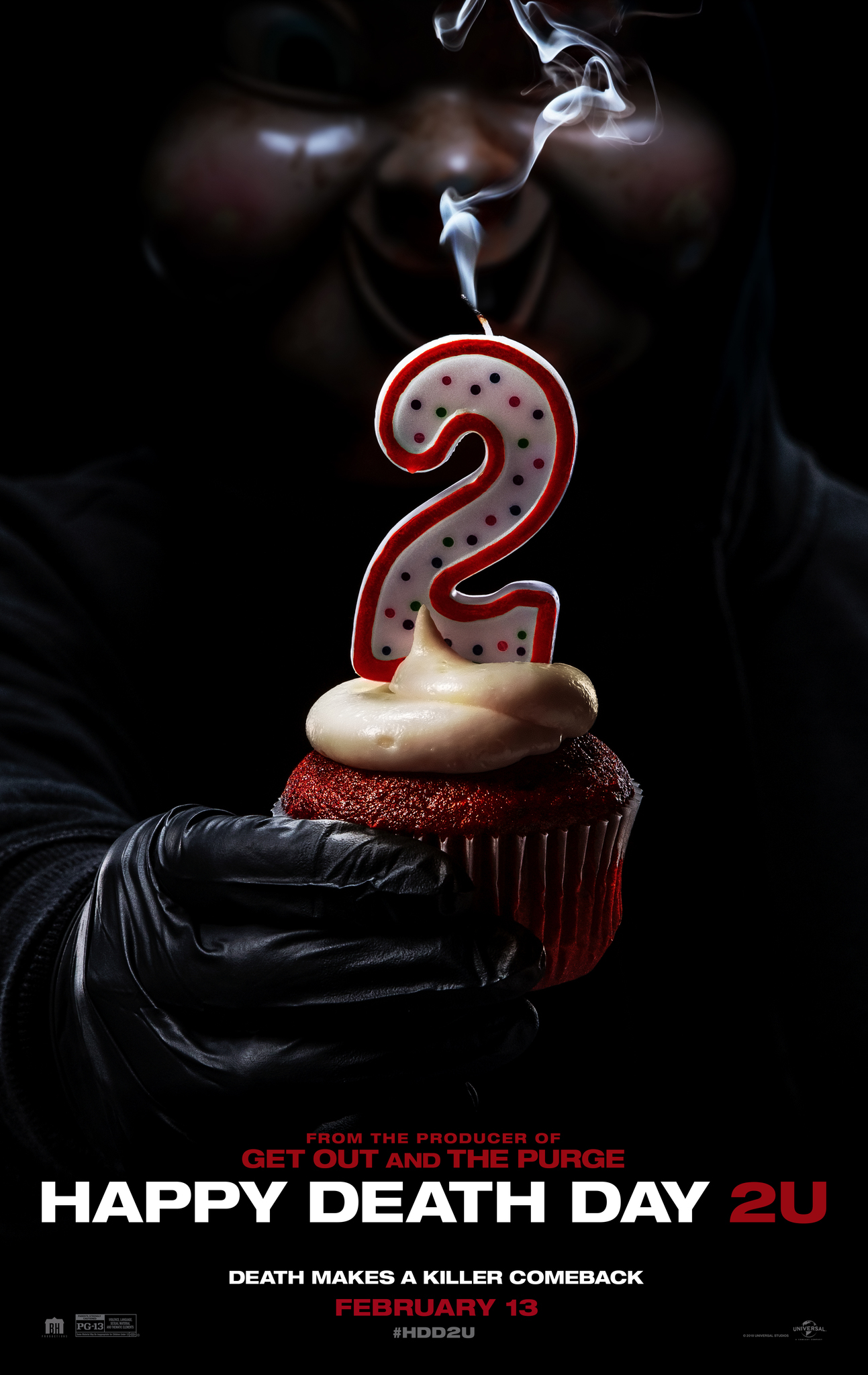
happy birthday 2u poster

This sequel to the surprisingly good Happy Death Day (2017) starts off doing something really interesting and then falls into the same groove as the original and becomes, well not bad, but just a little disappointing when you consider how good it could have been.

The original was basically a slasher movie take on Groundhog Day (1994). Tree Gelbmon (Jessica Rothe) is a superficial Mean Girl college girl who gets murdered by someone wearing a freaky big baby mask on her birthday. She wakes up on the same morning and keeps getting murdered until she solves the case (and gains a little maturity in the process).

I don’t want to spoil anything about the sequel (as it is a film definitely worth not knowing much about when you go into it) but for the first fifteen minutes it starts down a road that I found really interesting and I was excited to see where it took us. But then it more or less becomes the same movie as the original but with some tweaks.

It is still a lot of fun and the cast is great (Rothe should really be a bigger star by now). The film has a lot of fun providing lots of calls backs to the first one. The two films really go well together in fun ways. But it is never really surprising. I wish it had been a little more daring in where it took the story. But if you like the first one (and what’s not to like?) then it is very much worth watching.

31 Days of Horror: The Blancheville Monster (1963)

blanceville monster poster

This is film #2 of Arrow Videos Italian Gothic Horror boxed set. I’ll be reviewing the entire thing soon so I won’t say much about it here. The Italians were great at taking successful American genres and making them their own. When Roger Corman found success with several Edgar Alan Poe adaptations the Italians started adapting his stories. The Blancheville Monster (also known simply as Horror as seen from the poster) basically rips Corman’s adaptation of The Fall of the House of Usher. The story, about a woman who returns home to her family castle, discovers that everything has changed and that someone (possibly a ghost) is trying to kill her before her 21st birthday, is pretty standard gothic horror story stuff.

But it looks great and contains everything you want – a spooky old castle, creepy shadows, flowing white gowns, and a monster in the attic – from this sort of thing. It isn’t a great film, its own director essentially disowned it calling it “a little film of no importance” but I found it quite enjoyable.

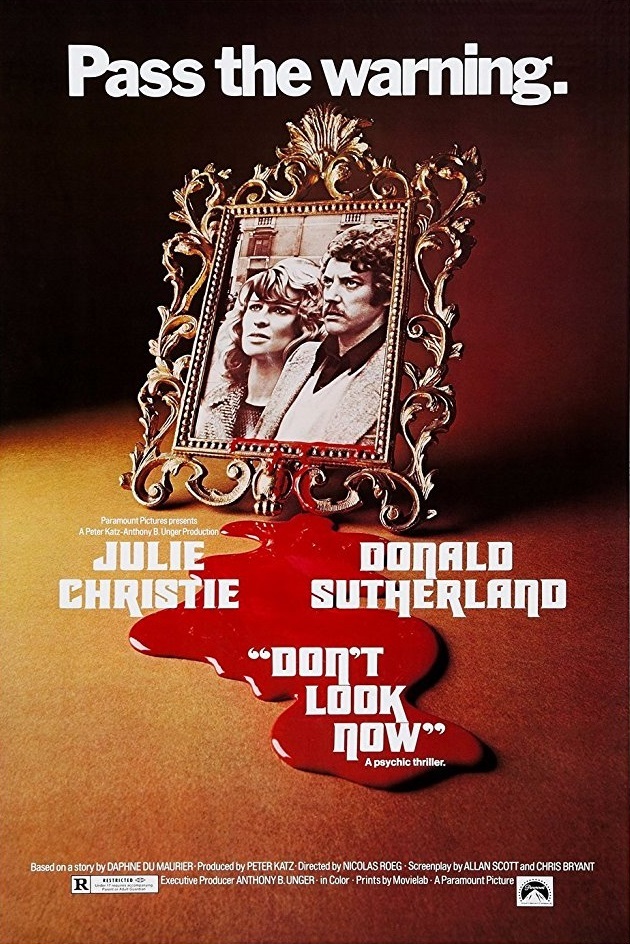
31 Days of Horror: Don’t Look Now (1973)

don't look now poster

I recently read a short story collection by Daphne du Maurier which contained the story upon which Don’t Look Now is based so I thought it would be fun to rewatch the film. Truth be told I started it several days ago, when the calendar still read September, but I had to pause it and didn’t return to it until this past Sunday. But since it can be considered a horror film I’m counting it for my 31 Days of Horror collection.

After their young daughter accidentally drowned John (Donald Sutherland) and Laura (Julie Christie) move from their home in England to Venice, Italy. John has been hired to restore an old church. While there Laura meets two elderly sisters, one of whom is blind and proclaims to have “second sight”. She says that she could see the dead daughter standing by the couple while they were eating and that she was happy.

Laura, still deep in her grief, takes solace in this notion and wants to speak to the ladies some more. John, also still deep in grief but maintaining absolute rationality, thinks the sisters are up to something.

That’s the very basics of the story, but in director Nicolas Roeg, and editor Graeme Clifford’s hands the film is much more than the details of what actually happens in the plot. Most of it was shot in Venice and the city comes off as a shadowy, crumbling old town filled with strange characters, dark corners, and ghosts. The film flashes backward and forwards, often for just flickering seconds. It flashes back to the day when their daughter drowned and to moments we’ve already seen in Venice. It flashes forwards as if premonitions of a future they want to avoid.

There is a famous scene in which John and Laura make passionate love (so passionately that rumors persist to this day that the actors were fully engaged on set) and the scene flashes forward ever so slightly to the couple dressing afterward. We see them pull their clothes off to make love then immediately they are individually putting new clothes on for dinner. They kiss passionately then shirts are buttoned. Etc. Over and over throughout the film scenes do this, giving it a dream-like quality. Little moments mirror each other too. We’ll see a reflection in the Venice canals and then a flash of the pond where the girl drowned. Time loops in on itself.

The ending is one of the more startling finishes to a film I’ve ever seen. The whole thing is marvelous. I enjoyed it more this time than the time before.