Mad Max (1979)

mad max poster

I’ve watched the Mad Max series kind of backward. I saw Fury Road (2015) in the theaters, and really quite loved it, while also noting its utter ridiculousness. Then I watched Mad Max 2 (1981) a couple of months ago and followed it up pretty quickly with Mad Max Beyond Thunderdome (1985). Truth is I had always heard that the first Mad Max film wasn’t all that good and that’s why I skipped it. Until now.

The film is quite a bit different than its sequels. Whereas they are set in a post-apocalyptic world in which society has completely broken down, in this one society seems to be mostly intact. For sure some things are broken, but it feels more in line with similar films from the era in which urban crime is high and the police seem helpless to fix it.

Mel Gibson stars as Max Rockatansky, an Australian police officer who is decidedly not the super awesome butt kicker he is in the sequels. Well, sort of not. In a pretty great opening sequence, some crazy bikers are being chased by Max’s fellow officer. They create all sorts of havoc until Max is called in and chases them down. But after that scene we find Max to be a gentle family man with a wife and small child. He takes them to the countryside and they have a nice holiday.

Of course, things eventually turn bad and Max becomes the man we’ve come to know and love in those later films. But it does take a while to get there. I feel like watching this series out of order was actually helpful. Had I watched the first one first I might not have gotten around to watching the sequels. But by watching the original after I had seen all the sequels, the original film now feels like an origin story, a prequel. And as such, while still not as good as any of the sequels, it fills in some character details and lets me know how Max became Mad Max.

There are some pretty spectacular car crashes, made even more incredibly realizing they all had to be done in one take as the tiny budget wouldn’t have allowed for more.

So, yeah, this feels like a warm-up for what is to come. Consider it practice for the terrible beauty of Mad Max 2 and Fury Road. Or look at it like a full-length DVD extra origin story.
The Driver (1978)

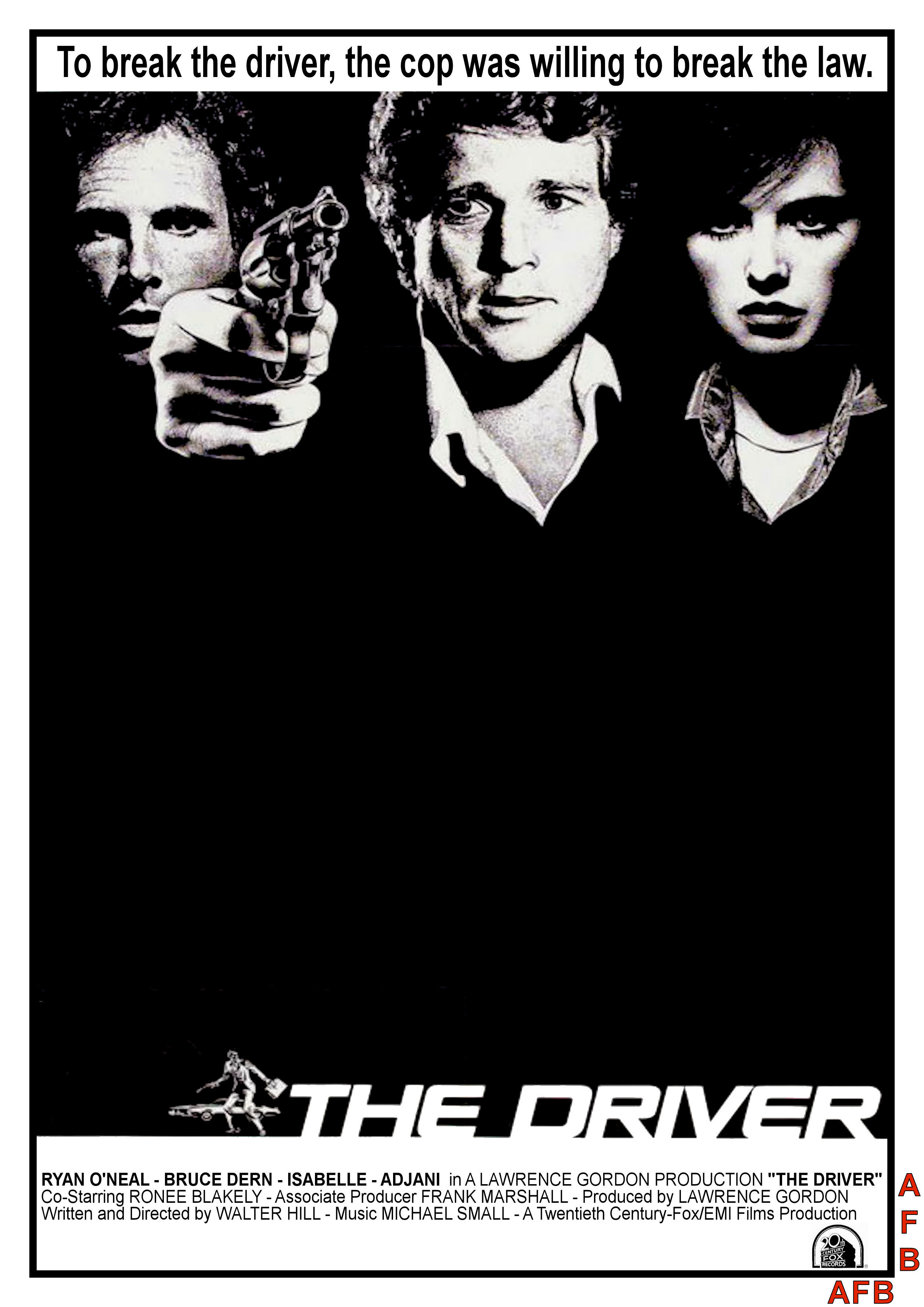
the driver movie poster

The Driver is a professional. He’s the best at what he does. He won’t take a job if he doesn’t like it. He’ll never work with you again if you don’t follow his rules. He has no attachments. He gets the job done. He’s paid well for his services. He takes a job he shouldn’t have. He gets entangled with a woman. Things get complicated

If that plot synopsis sounds familiar that’s because The Driver (1978) was a clear inspiration for both Drive (2011) and Baby Driver (2017). I’d argue both of those later movies are better than The Driver, but certainly, it has its merits. The car chase sequences alone are worth the price of admission. Director Walter Hill uses every ounce of his relatively small budget in several automobile-heavy action sequences. They aren’t as stylish as the ones in Drive or Baby Driver but they do pack a punch.

Ryan O’Neal plays The Driver (none of the characters are given names in the film, they are named by their functions in the credits) as a man of few words, who keeps everything close to his chest. He won’t take a job if he feels it is too risky, or if he knows guns will be involved, yet he is not afraid to deal out violence when he feels it is needed. He’s being chased by The Detective (a snarling Bruce Dern), who sets up a trap for The Driver in which he forces three other cons (who are named Glasses, Teeth, and Fingers) to talk The Driver into doing a job with them. The idea is that The Detective will know all the ins and outs of the job and will be able to catch The Driver red-handed. The Driver recognizes it is a setup and refuses to have anything to do with it, but then basically The Detective dares him to do it and like Marty McFly in Back to the Future, our hero can’t back down when someone calls him a chicken.

There is a love interest, of sorts. She’s called The Player (Isabelle Adjani) and she was a witness to the first job we see in the film, but she refuses to name The Driver to The Detective. He paid her off and they do a little flirting, but not much more. There’s also The Connection (Ronee Blakley) who works as The Driver’s handler. But all of this is just a way for the film to give us another action sequence.

I don’t want to sell those scenes short. They really are terrifically staged. I really dug a scene in the middle where The Driver is showing off. He runs the car all around a big underground garage, running it in and out of cars and those big concrete pillars. Then he very strategically smashes into things knocking bits and pieces of the car off. There is something very down and dirty to the way Walter Hill films those scenes. Drive is sleek and noirish, and Baby Driver is set perfectly to pop songs, but The Driver shoots them like fight scenes – rugged and brutal.

Definitely a film worth seeking out.

The Duellists (1977)

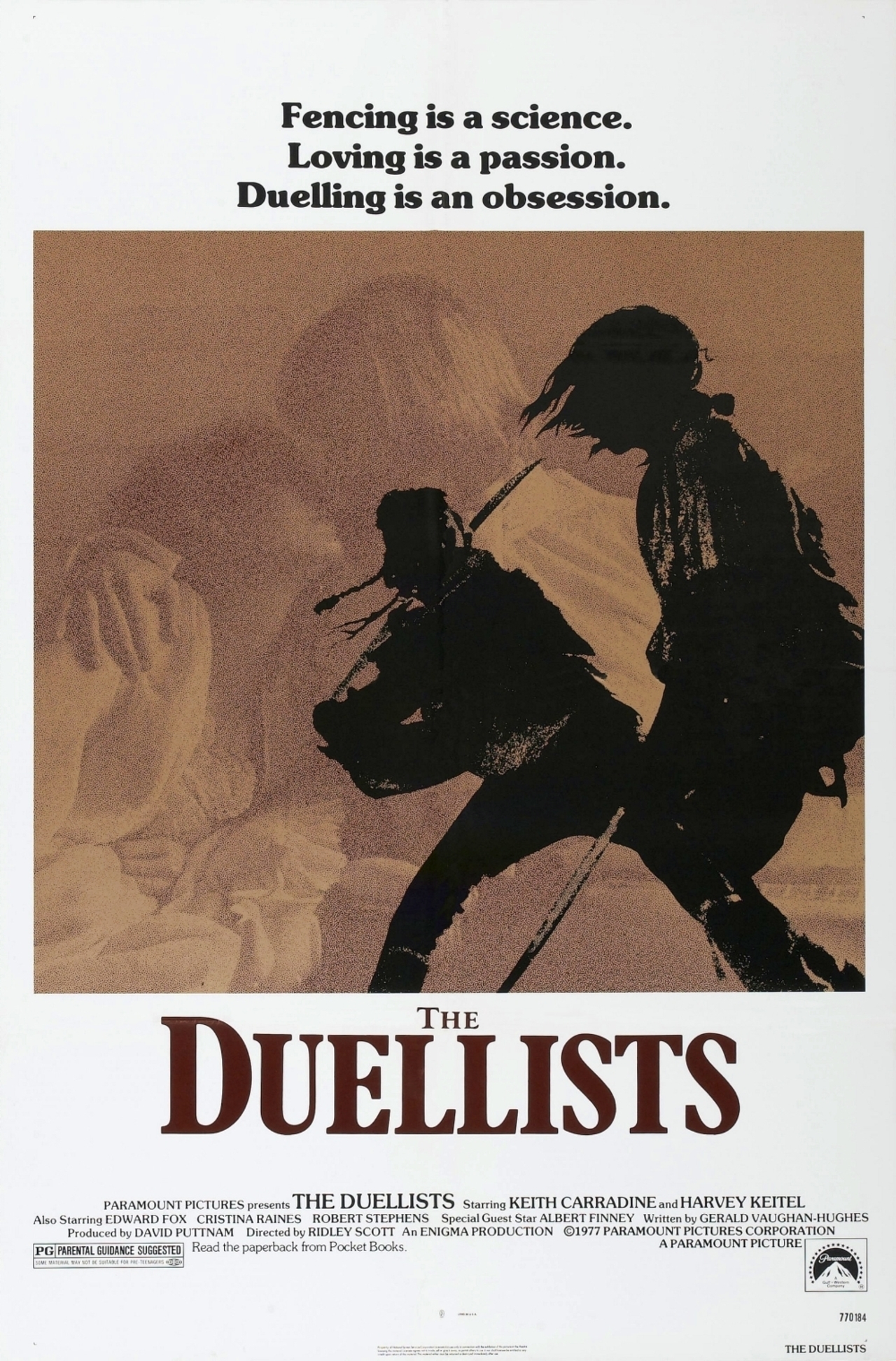
the duellists poster

For a while now I’ve had this idea of creating a list of my favorite films from every year that I’ve been alive. I was born in 1976 so I’d start there and then move forward. I’ve never actually gotten around to it because I figure I need to make sure I’ve seen all of the “classic” movies from each of those years. I don’t want to talk about my favorite films from say 1982 and have somebody chastise me for having never seen Fanny & Alexander or whatever. From there I figure I need to designate a month to each year and watch as many films from that year in that month and then I can really tackle that project. Then I realize I’m 47 years old and it will take me a few years to do that and I just give up.

The other day I randomly watched The Cassandra Crossing which was made in 1976, the year I was born. A new idea was born in my mind. What if I watched one film from every year that I’ve been alive, and do it in chronological order? That seems fun. The only rule would be it has to be a movie I’ve never seen before. And so here we are.

The Duellists is one of those films that’s been on my list to see for a very long time. It was Ridley Scott’s first film and while he is not by any means my favorite director, when he’s good he’s really good and I’d heard this one was really good. I heard correctly.

Based on a Joseph Conrad short story The Duellists focuses on two French soldiers during the Napoleonic Wars. It begins with Lieutenant Gabriel Feraud (Harvey Keitel) dueling with a young man, whom he promptly skewers with his sword. Turns out the young man was the son of the mayor of Strasbourg which puts Feraud into hot water. The higher-ups send Lieutenant Armand d’Hubert (Keith Carradine) to put Feraud under house arrest. He’s having none of that and immediately challenges Armand to a duel. Armand initially thinks the whole idea is ridiculous, dueling with a man he has been sent to arrest for dulling, but Feraud is relentless and the two eventually do duel. The fight ends when Armand knocks Feraud unconscious and is then clawed in the face by his mistress.

A few months later they duel once again and Armand is seriously wounded. Over the next decade, they duel several more times. It is never made clear why Feraud insists on dueling Armand every time they meet. For his part, Armand wants no part of it, but he is duty-bound. If Feraud claims some offense and demands a duel, then he must agree. They cannot duel if Armand outranks Feraud, nor if France is engaged in war. Luckily for Armand, Napoleon is in charge, and Napoleon is always at war.

The film never lets us know if there was an offense to begin with. It sometimes hints that it might have been over a woman, or perhaps Feraud thinks Armand is not loyal enough to Napoleon. But it doesn’t really latch onto either of these ideas. Maybe Feraud hates Armand for some imagined slight. Or perhaps he just likes to duel. The film mostly follows Armand, only letting us see Feraund during the duels, so maybe he spends all of his free time dueling as many people as he can.

The film was influenced by Barry Lyndon (1975) the only Stanley Kubrick film I have yet to watch. The cinematography is lush and beautiful. Keith Carradine is one of those actors whose name always rings a bell, but I can never remember who is he or what he’s starred in. Until I see his face and hear his voice, then I remember how good he is in everything. He’s terrific here. He is a man who wants a simple life, and mostly finds it, but that life is constantly interrupted by Feraud and his demands for duels. When he sees Feraud in a cafe, Armand promptly leaves. He doesn’t want to fight. Yet he always does because he feels honor bound.

The movie is all about honor and duty and how those are often foolish and futile things. Feraud wants to kill Armand over some perceived slight that is so minuscule Armand doesn’t even know what it is. Armand is willing to die (or to kill) to uphold his honor. One could easily expand these thoughts broadly into the futility and foolishness of war between nations. The movie doesn’t get bogged down into these high-minded ideas. It keeps things grounded.

It is amazing to think this was Ridley Scott’s first film. It is an ambitious film for any filmmaker and for it to be his first time as a director it is rather stupendous. That he followed this with Alien(1979) and then Blade Runner (1982) is astounding. Sadly, the rest of his career has not always been so monumental, but for those three films alone he may stand tall.

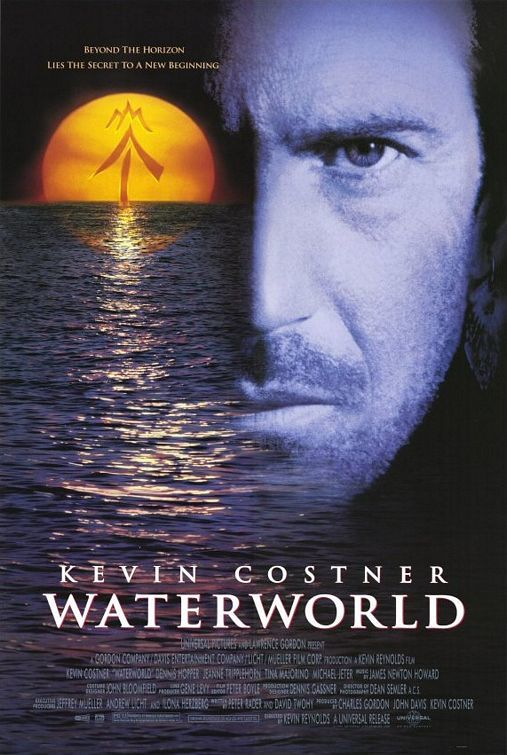
Waterworld (1995)

waterworld

This film had a notoriously troubled production and was, at that time the most expensive film ever made. I still remember newscasts breathlessly talking about production delays and cost overruns. It became one of the more famous cinematic bombs.

The story is actually pretty cool – the polar ice caps have melted covering all the land with water, creating an apocalyptic world where everyone survives on boats and you have to barter for everything. It is like Mad Max, but on water instead of the desert.

The sets and effects are all practically done, and I love that. They built a huge floating atoll and shot it on the ocean just off of Hawaii. The world-building is very cool.

The script is bad. It is filled with a lot of cheesy gags and ridiculousness. Kevin Costner is half-fish for some reason. Dennis Hopper, as the villain, is way over the top and just awful. The direction is sloppy. I kept thinking if it had been directed by George Miller it would have been a stone-cold classic. As it is, it is marginally worth watching, but just barely. I watched the studio cut which runs just over 2 hours. There is an extended cut that lasts over three. Maybe that one is better, but I can’t imagine sitting through it.

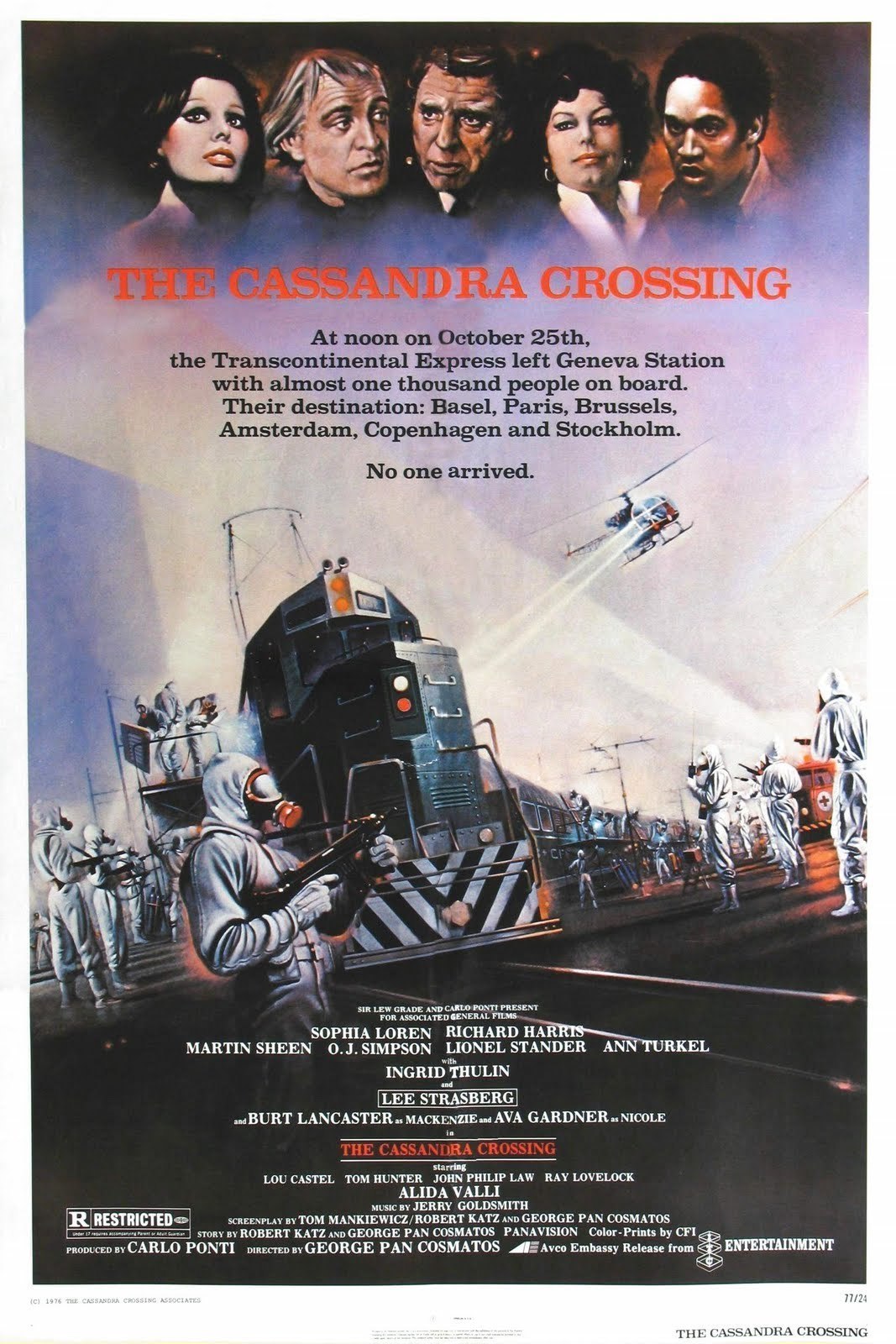
The Cassandra Crossing (1976)

the cassandra crossing poster

The Cassandra Crossing which is one of those star-studded disaster movies that was so popular in the 1970s. It is about how an eco-terrorist accidentally contaminates himself with a deadly virus and then boards a train. Once the government learns what’s happened they seal up the train and make sure no one can get off. They reroute it to Poland where they will be quarantined until a cure is found. To get there they have to cross a disused and likely hazardous bridge called the Cassandra Crossing.

Richard Harris plays a neurologist who just happens to be a passenger on the train and becomes the defacto hero. Burt Lancaster is the government, military guy back at the base barking all the orders to keep everybody aboard. The cast also includes Sophia Loren as the neurologist’s wife, Ava Gardner as the wife of an arms dealer, Martin Sheen as her plaything, OJ Simpson as the world’s worst priest, and Lee Strasberg as a Jew who is none too keen to be returning to Poland (apparently the train is going to quarantine them at an old concentration camp.

That’s a good cast and the basics of the story are interesting, but like so many of these star-studded disaster movies it spends too much time giving each actor a good scene or two, and not enough making me care. Or at least be thrilled by the suspense.

It is confusing, too, I’m not 100 percent sure they were headed towards the concentration camp. Wikipedia says so, and Strasberg’s character has a nervous breakdown, but I didn’t hear any dialogue expressly stating that was their destination. I’m not really sure why they have to go to Poland anyway. The train was originally a Geneva to Stockholm exchange. It seems like they could just park it somewhere relatively isolated, board it up, and wait until the doctors figure things out. A lot of the plot is like that – confusing.

The actors, for the most part, seem to be having fun, and I always like watching lots of cool actors in a film together. But I wish they’d tightened things up a bit and concentrated on making this thing as tense as possible. Instead, it is a bit of a bloated mess.

Things do get a little exciting toward the end when our heroes do battle with the military goons in order to stop the train before it pummels off the bridge and it’s got one of those terrifically bleak endings. But it takes far too long to get there to make this a recommendation.

Fifteen Years of Bootlegs

Though I started this blog in 2004 it wasn’t until 2008 that I started posting bootlegs for download. That’s approximately fifteen years (more or less, there have been some stops and starts along the way) of me posting shows on this blog. I don’t have any real idea of how many shows I’ve posted in all those years. I’ve got 6,960 of them that I’ve labeled “Bootleg Bonanza” which is what I used to call those posts. But that doesn’t include any of the shows that are still locked away in private mode, nor any of the more recent shows that I’ve thrown up on Google Drive. That’s a lot of sharing. I’m proud of that.

Five years ago I did a series of posts where I celebrated Ten Years of Bootlegs. I did a little countdown of my Top Ten most popular bootleg posts, according to my hit counter. I thought it would be fun to revisit that post with an update for the 15 Year Anniversary.

As always there are caveats. My hit counter is wrong. Over the years I have switched a time or two between WordPress and Blogger. I’ve had my own website, I’ve downloaded counters, and relied on whatever WordPress uses internally. I went private for a few years, blocking all search engine access. I urged everyone to sign up for my e-mails (which means most people never actually come to the site, they just download from the e-mail.) And now that I’m doing daily posts where I mostly link directly to Google instead of doing individual posts for each show. All of that has massively messed with my stats.

But with all of that in mind, I still think it is fun to see what is most popular.

Here’s the original list, with original stats.

10. Bob Dylan – Abandoned Desire – 2251 hits
09. Bob Dylan – 1978 Tour Collection – 2125 hits
08. Bob Dylan – The Genuine Never Ending Tour Covers Collection (1988-2006) – 2345 hits
07. Bob Dylan & The Grateful Dead – The Entire Tour – 3015 hits
06. Bob Dylan – The Complete Supper Club Soundboards – 3302 hits
05. Bob Dylan & Mark Knopfler – The Complete Recording Session – 3254 hits
04. Bob Dylan – Santa Cruz, CA (03/15-16/00) – 2874 hits
03. Bob Dylan – A Couple More Years – 3646 hits
02. The Allman Brothers Band – San Francisco, CA (12/31/73) – 3552 hits
01. Bob Dylan – The 1974 Soundboard Collection – 4367 hits

And here’s the updated list.

10. Bob Dylan & The Grateful Dead – San Rafael, CA (06/01/87) – 3802 hits
09. Bob Dylan – 1978 Tour Compilation – 3891 hits
08. The Grateful Dead – The Entire Warfield Theatre 1980 Run – 3963 hits
Van Morrison – Shows by Year – 4251
07. Bob Dylan – Santa Cruz, CA (03/15-16/00) – 4459 hits
06. Bob Dylan – The Genuine Never Ending Tour Covers Collection (1988-2000) – 4641 hits
05. The Allman Brothers – San Francisco, CA (12/31/73) 4880 hits
Grateful Dead: Shows by Year – 5103
04. Bob Dylan & Mark Knopfler – The Complete Recording Sessions 1979-1986 – 5191 hits
03. Bob Dylan – Complete Supper Club Soundboards – 5323 hits
02. Bob Dylan – 1974 Soundboard Collection – 6487 hits
01. Bob Dylan & The Grateful Dead – The Entire Tour – 8139 hits

So as you can see it mostly stayed the same, which makes sense, I guess. What was popular then stayed popular now. The positioning has changed a bit which is interesting.

The Dead’s Warfield run of 1980 joined the list. It wasn’t posted until the middle of these anniversary posts which explains why it wasn’t on the original list. And a single Dylan and the Dead show also entered the list. I’m not sure why that particular one is popular. Pushed out were two Dylan outtake sessions – Abandoned Desire and A Couple More Years.

And there you have it. I don’t know if anyone but me cares about this stuff but I think it is pretty interesting. It does sadden me a little to realize that the way I post shows now pretty much eliminates my ability to know which shows are the most popular. Maybe someday I’ll go back to posting individual posts for individual shows, but that day isn’t today.

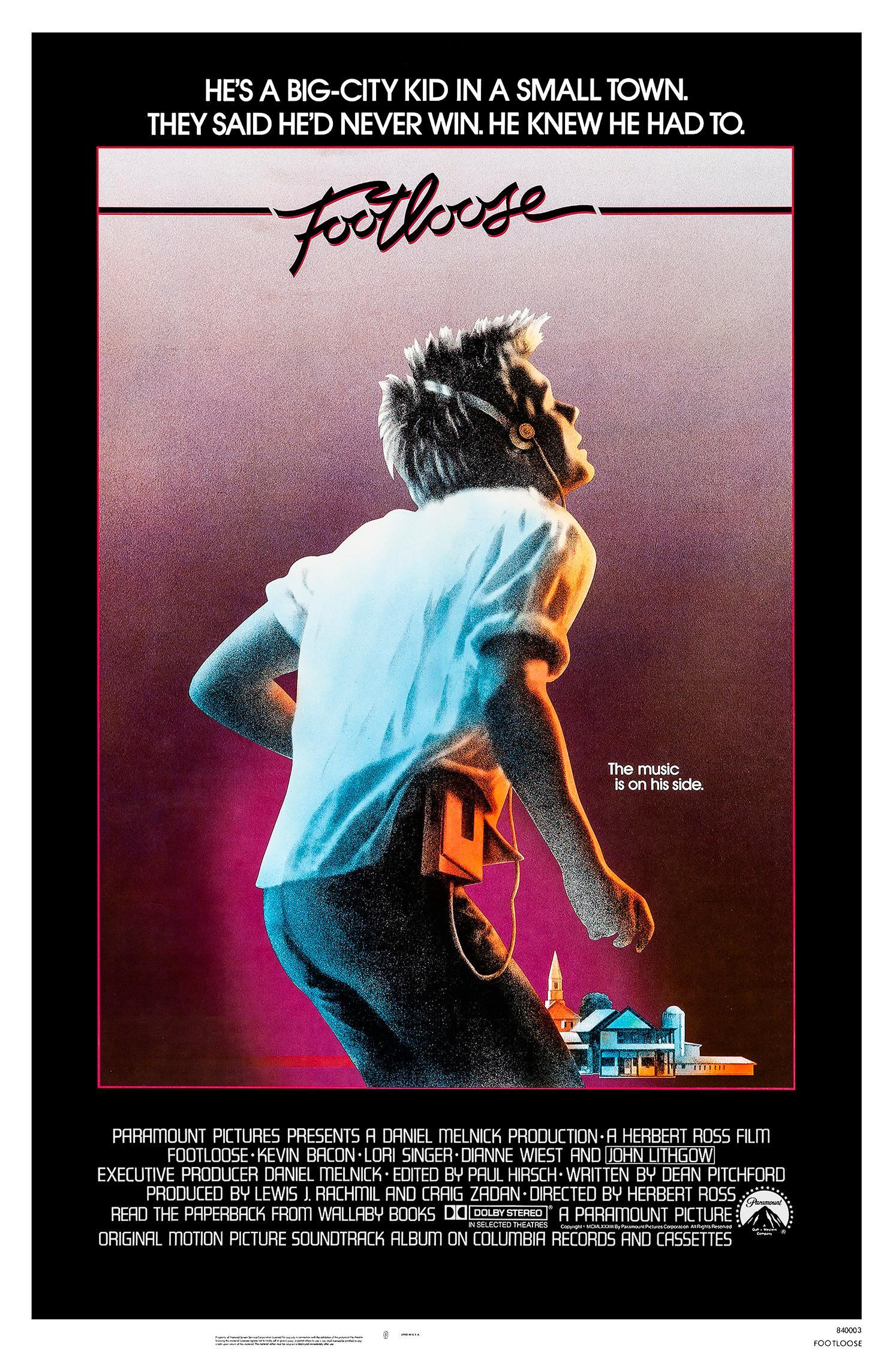
Footloose (1984)

footloose poster

I grew up in a small, conservative town in Oklahoma. My family attended a conservative, evangelical-ish church. My parents were conservative and religious, though I’ve since come to realize they weren’t quite as conservative as many folks in their social circles were at the time. I was allowed to listen to rock and roll music, and we watched all kinds of movies, sometimes even Rated-R movies.

My memory is fuzzy but I believe they did not allow my brother, who is four years older than me, to go to school dances. Dancing leads to sexy thoughts which leads to actual sex, or so the thought went. By the time I got old enough they had loosened up on that idea, but I actually had no desire to go to dances. I was way too shy to ask a girl to one, and even if I did, I didn’t know how to dance.

Footloose is a movie about a teenaged boy named Ren (Kevin Bacon) who moves from the big city of Chicago to a small, mountainside, Midwestern town. It is more or less run by the local Preacher (John Lithgow) who instigated a town ban on dancing of any kind. Now, in this scenario dancing doesn’t lead so much to sexing (though certainly, that is still on the reverend’s mind) but to drinking and that leads to death. Or at least it lead to his son’s death when he did some drinking and driving.

So Ren comes to town, and he’s the new kid so he gets picked on by the bullies, one of whom challenges him to a game of chicken on tractors. There’s a little trouble at school, too, which turns Ren into a troublemaker in the eyes of the preacher. But he also makes a friend with Willard (Chris Penn) and the preacher’s daughter Ariel (Lori Singer).

Did I mention the town has banned rock and roll, too? Like all bans of this sort, they don’t do any good and the teens listen to rock and roll, drink beer, smoke cigarettes, and have a little sex. But what they don’t do is dance. At least not in an organized fashion. Queue Ren and his righteous fight to have a school dance.

Though it was a big hit when it came out in 1984 I only just saw it this weekend. I did have the soundtrack though, and it’s killer. I don’t think my parents outright banned me from watching it, but I do remember hearing discussions about how us kids shouldn’t watch it because it promoted dancing and disrespecting authority. Someone also complained that the theme song by Kenny Loggins promoted skipping church to go dancing and having fun.

Had I been interested in seeing the film, I no doubt would have found a way, but it just didn’t look that good to me. Watching it now I can firmly say it is a very dumb film, but also ridiculously fun.

They don’t hammer too hard on the morality of the film, and Lithgow plays the preacher with some nuance and, eventually, some heart. Mostly it is a film that wants to be a musical and loves to do dance montages.

Two of my favorites include Ren getting frustrated by the preacher and running off to some warehouse where he proceeds to drink, smoke and do an amazing dance all by himself. Later, when he learns Willard can’t dance he teaches him. And we are treated to this lovely montage of those two teenage boys dancing together (one might think this film is very gay – one might not be wrong).

I don’t think it is too much of a spoiler to say that the teens get their dance. What I love about the final dance scene is that it isn’t some carousing, dirty dancing affair. No, the teens do a little line-type dance and then mostly just dance by themselves. It is very chaste, just some kids having fun.

And that’s the film. Really pretty dumb, but tons of fun to watch.

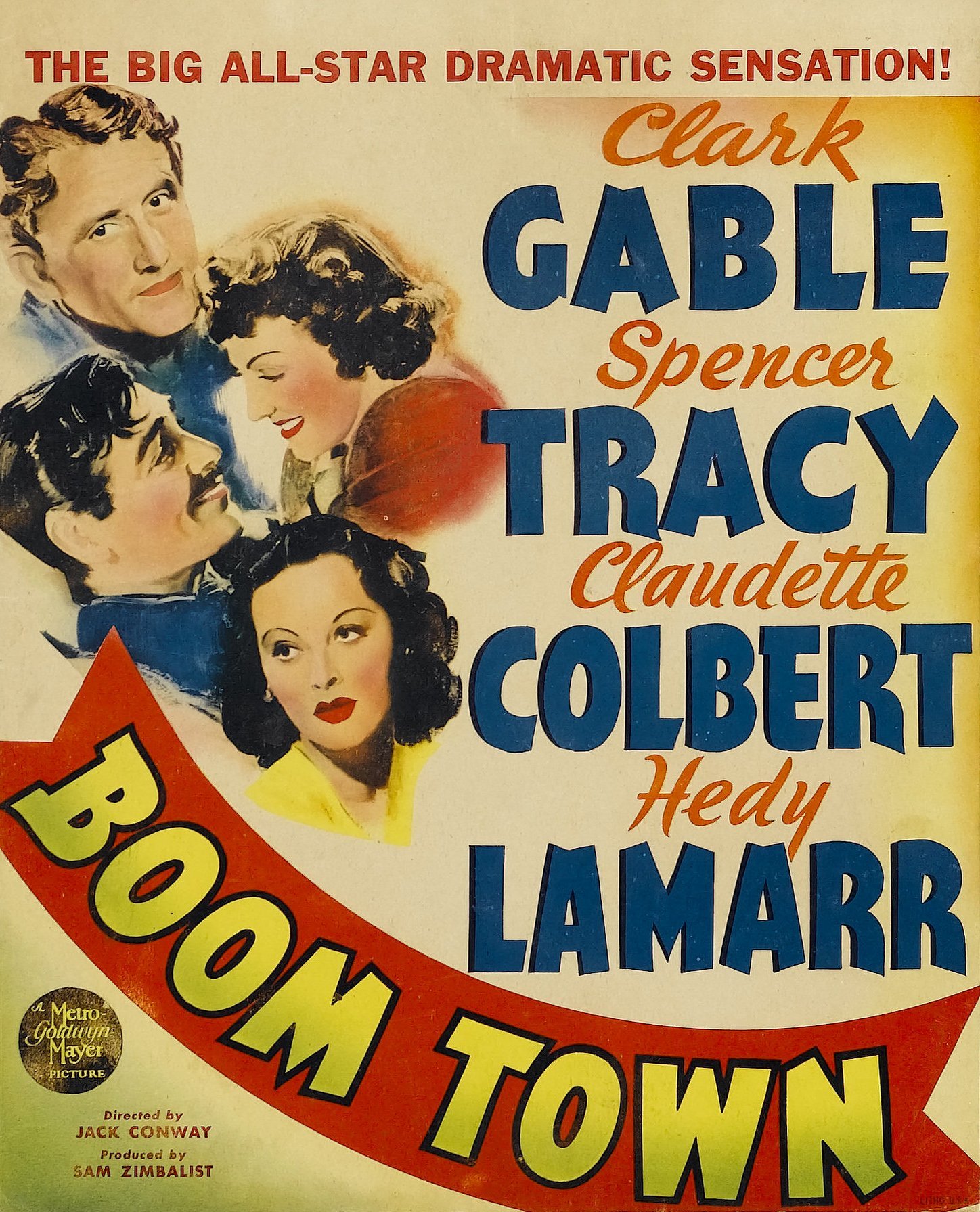
Boom Town (1940)

boom town movie

While looking for something to watch I stumbled upon this movie. A western starring Clark Gable, Spencer Tracy, Claudette Colbert, and Hedy Lamarr, I thought, why have I never heard of this before? The answer, of course, is that it isn’t that good. Great movies become beloved, and bad ones are notorious, but average ones are easily forgotten.

Gable and Tracy play Big John McMasters and Square John Sand respectively, two oil wildcatters. The film starts out strong enough with both of them down on their luck, out of work, and out of money. Square John has spent his last dime on some Oklahoma land he’s just sure is full of oil, but he’s got no cash to buy the drilling equipment. Big John says he has cash and they team up together. Turns out he doesn’t really have any money but he cons the equipment from Luther Aldrich (Frank Morgan). Oil flows and the two of them are rich.

Square John has a girl, Betsy (Claudette Colbert) back home he’s been courting since he was a young buck, but he’s yet to talk her into marriage. She shows up without warning and meets Big John without either knowing who the other is. She pretty quickly figures out he’s Square John’s partner, but she finds it fun to toy with him without him knowing who she is. They talk and flirt, and fall in love. In the morning she fesses up, but admits she never really loved Square John, at least not in that way, and came all the way out to let him down gently.

Square John, for his part, takes all of this on the chin. Betsy and Big John get married and things go well. Until they don’t. She finds him in the arms of another woman, starts to leave him, but ultimately forgives him. Something Square John cannot do.

He breaks up their partnership and the rest of the film finds one of them up and the other one down, financially speaking. When one is down he wants nothing to do with the other, and vice versa.

It is here that the film falls apart for me. It goes on for far too long having one of them strike it rich and then lose everything and then the tides turn. Betsy is stuck in the middle. Hedy Lamarr eventually shows up as a woman who uses her skills and charms to basically be a corporate spy, giving Big John the scoop on what is going down in New York, and giving him the upper hand. She uses those same charms to woo him, creating yet another rift in the relationship.

I love me some Hedy Lamarr but by the time she really gets going, I was ready for the film to end. It has some really oddball things to say about love and marriage and the story just falls apart about midway through.

That’s too bad, too, because it has a great cast and that first half has a lot of promise.

The filmmaking is actually pretty great. The actors are all very good and the photography is very picturesque. There is one brilliant scene in which an oil well catches fire. The blaze is tremendous and a score of workers risk their lives to put it out It really is quite something to see.

The Shout (1978)

the shout movie poster

I had planned to make this film last week’s Friday Night Horror movie, but about halfway through I stopped it to do some family things, and when I tried to pick it back up, my Internet was acting wonky and I couldn’t get it to play (it is currently on the Criterion Channel). But since it has been on my mind, I figure I’ll talk about it now.

A cricket game is being played at a mental institution. Patients and employees play alike, and a few outsiders are brought in as well. One such outsider, Robert (Tim Curry) takes score inside a covered wagon. A strange man (Alan Bates) joins him. This man begins to tell a story and the film follows.

In a small, seaside village live Anthony and Rachel Fielding (John Hurt and Susanna York). He’s an experimental composer who also plays organ for the local church. After services, one Sunday a stranger, Crossley (Alan Bates) begins talking to Anthony. Crossley has some odd ideas about theology and Anthony pushes him away stating that he has to go home. Instead, he meets with his mistress for a tryst.

When he does arrive home he is met at the door by Crossley, who slyly mentions how long it took Anthony to get to his home. Crossley then invites himself for dinner. He says that he spent fifteen years living in the Australian outback with the Aboriginal people where he learned their magic. He professes to know a shout that will kill anyone within listening distance.

At first, the Fieldings are put off by him, but then he seems to hold power over them. Rachel is seduced by him and Anthony does whatever he says. The film is somewhat vague on whether or not he does have supernatural power. It seems to be real, but it could also be a hallucination.

The entire film could be a hallucination, come to think of it. We periodically cut back to that cricket game. Crossley is there telling the story, at least I think it is Crossley. It is someone played by Alan Bates but I don’t believe he ever gives his name. Anthony is there, too, playing cricket. But again, is that Anthony, a different character played by John Hurt?

Are these two characters at the cricket match patients? Has the storyteller been telling the truth, or is he just making up a story? Is the cricket player actually Anthony? Is he now a patient at the hospital? Or do we see that person as Anthony inside the story because the storyteller just happens to be watching him play cricket?

The film doesn’t let us know any of the answers. It is enigmatic and strange. British films in the 1960s-1970s were often enigmatic and strange. They often dealt with the supernatural and relied more on mood and eeriness and plot. So it is with The Shout. Don’t expect the film to tell you anything and you might find yourself enjoying it.

Dead Men Don’t Wear Plaid (1982)

dead men don't wear plaid poster

I first learned of Dead Men Don’t Wear Plaid inside a little video rental store. The VHS had a cool cover with Steve Martin on the front aiming a gun at the audience, a plaid outline behind him. This would be the late-ish 1980s and Steve Martin was a huge star. I was a young teen and loved Martin in movies like Three Amigos (1986), Roxanne (1987), and The Man With Two Brains (1983). I immediately picked the VHS up and talked my mother into renting it.

We took it home and I popped it in the VCR and pressed play. I was immediately disappointed. It was in black and white. I hated black-and-white movies. Or I thought I did. I’d never actually seen one. But black and white movies were old and old was bad. At least that’s what I thought back then anyhow.

I watched for maybe ten minutes then turned it off in disgust.

Many years later, when I learned that there are, in fact, many really great movies in black and white, I decided to give it another spin. I was definitely a classic movie fan by then, but just a beginner. I knew actors like Humphrey Bogart and Cary Grant, Ingrid Bergman, and Vincent Price. I’d seen a few film noirs but was by no means an expert.

The film is a homage to the classic film noirs of the 1940s. Through trick editing, it intercuts the new story with clips from 19 classic films. It does this surprisingly well.

Steve Martin plays Rigby Reardon a private investigator who is hired by Juliett Forest (Rachel Ward) to investigate the murder of her father. During the investigation, he comes across a large crowd of interesting characters, which is where the classic films come in.

Sometimes Reardon will call someone on the telephone and it will be Humphrey Bogart from The Big Sleep (or some other classic film star in a classic movie) who will answer. The dialog is cut as if Reardon is talking to Phillip Marlowe. Other times he’ll meet up with someone and it will be Veronica Lake in The Glass Key (or some other classic film star in a classic movie). In these instances, the film will sometimes use an extra dressed like the classic film actor, shot from behind, so that they can interact with Reardon in a more realistic way. It is all done cleverly and that makes it a really fun watch.

The great Edith Head (in her last film) did the costumes and she did an amazing job matching everything up. Ditto the lighting and staging and everything.

The film was co-written (with Steve Martin) by Carl Reiner, and it was directed by him as well. Reiner is a vaudevillian at heart and this is very much in Martin’s very silly stage (long before he started writing for the New Yorker and Broadway). I have to admit I’m not a big fan of that style of comedy. It is too jokey for me.

It is also a bit cringe. There is an ongoing joke where Reardon feels Juliet Forest’s up, caressing her breasts because they were knocked out of place during a scuffle. Or another time Reardon gives Juliet a kiss when she has passed out. There are quite a few dumb gags like that that play very differently now.

I am now a very big fan of classic movies and film noir in particular. I’ve seen more than half the films included inside this movie and so all of that stuff was really quite delightful. It is very well done; clearly, the filmmakers are very big fans of classic movies.