Planet of the Vampires (1965)

planet of the vampires bluray

Mario Bava is one of the all-time great horror directors. He basically created the Giallo subgenre and was a master visualist. He also directed lots of other genres, including sword and sandals movies and science fiction. Planet of the Vampires is a bit of a genre blend including both sci-fi and horror. Kino Lorber recently released a nice copy of it on Blu-ray and I wrote a review which you can read here.

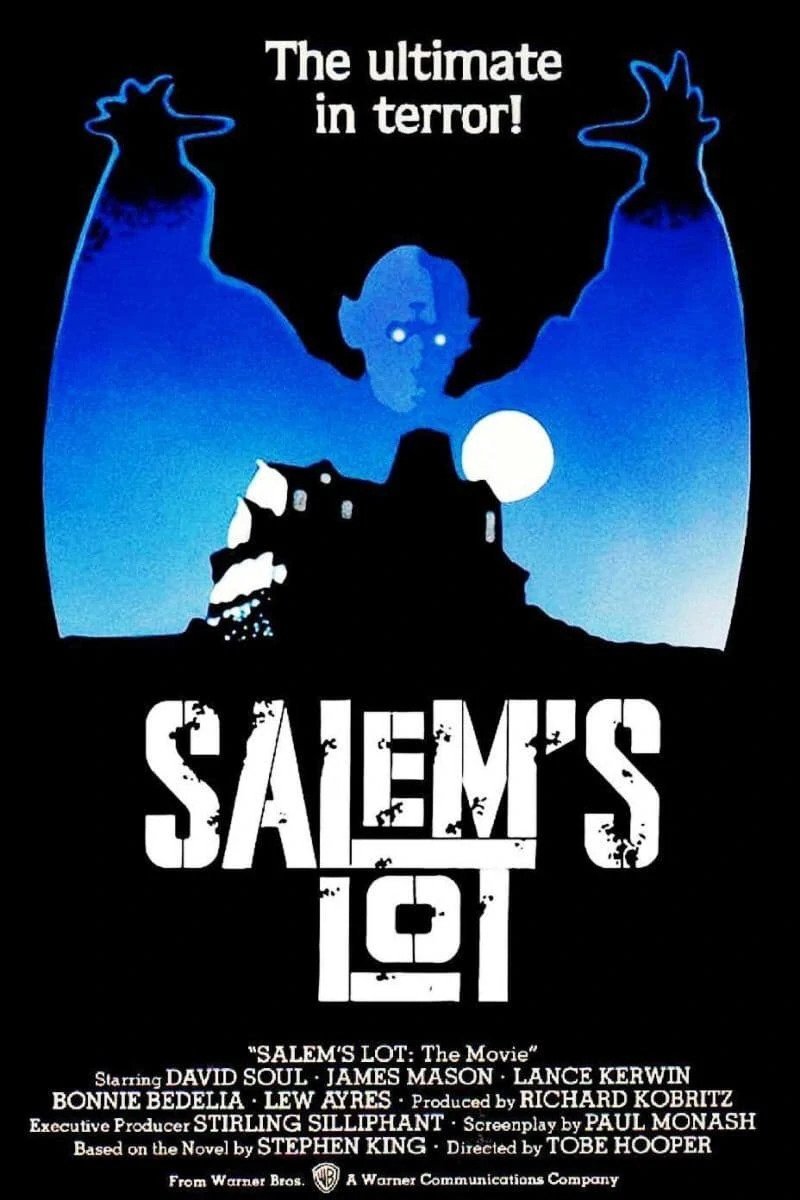
Salem’s Lot (1979)

salems lot poster

I was slow coming ’round to Stephen King. Growing up I was more of a Dean Kontz man. I read the short story The Langoliers when I was in high school and loved it, but for some reason didn’t even both finishing the other short stories in the book much less read any other King. In college, I read Dolores Claiborne, and loved it, and then didn’t get around to reading any other King books until a few years later. And so it went for a long time. I’d read a King book, love it, and then not pick one up again for many months or years. And then four or five years ago I got a copy of the Mr. Mercedes audiobook from the library and really dug it, then picked up the sequel, Finder’s Keepers, and I was off to the races. I’ve been reading him steadily ever since.

I read ‘Salem’s Lot about 12 years ago and absolutely loved it. I’m a sucker for vampire stories and King tells a really good one. It remains one of my favorite novels of his. Tobe Hooper directed a two-part TV miniseries back in 1979 and I decided to rewatch it this week. It is surprisingly good.

The story concerns Ben Mears (David Soul) a writer (the first of many times the protagonist in a King story would have that occupation) who grew up in the small town of Salem’s Lot, but moved away as a boy. He comes back to write about a spooky old house up on a hill that has a sordid history and is rumored to be haunted. He plans on renting it but as it turns out the house has just been purchased by the mysterious Richard Straker (James Mason, completely enjoying himself), and his absent partner Kurt Barlow.

Turns out Barlow is an ancient vampire and Straker is his familiar. But the movie takes its time getting to that part. First Ben has to meet Susan (Bonnie Bedelia), the romantic interest, plus other assortments of characters. It isn’t until the second part of the movie, more than 90 minutes into its three-hour runtime that we actually see the vampire. Mysterious things do happen, people get sick, a kid dies, a dog is murdered, etc., but Hooper keeps the pace slow and the eeriness high.

There is quite a lot of padding, as one would expect from a TV movie made in 1979. And the production values fit within that genre as well. But Hooper gives some good jump scares and several truly spooky scenes. There’s one in which a vampire kid floats into another kid’s room which is an all-timer. The look of the main vampire is very Nosferatu-esque and pretty darn terrific.

It is a film that, if you consider the budget and its limitations, comes across as surprisingly great, and well worth watching.

Frankenstein Meets The Wolfman (1943)

frankenstein meets the wolfman poster

I’d like to say that I grew up going to the Midnight Movies and staying up to watch the old Universal horror movies on television. I’d like to say that, but I can’t because, well, because it simply isn’t true. I grew up watching movies from my generation, the 80’s, and that means the Goonies, Gremlins, Ghoulies, and others that don’t start with the letter “G.’ It has only been recently that I have dipped into the classics of horror and began watching them.

There has been a recent spat of high-quality DVD releases of the mainstays of the franchise – Dracula, Frankenstein, and the Wolfman – and I’ve filled my till with the magic, the brilliance that is those films. So, it was with pleasure that I recently found a VHS copy of Frankenstein Meets the Wolfman.

To say this is a great movie would be missing the point and make me think you were delusional. It’s far from anything anyone ought to call great, but it’s still a pretty fun bit of horror history.

The title is a little misleading – well not technically so since Frankenstein does in fact meet the Wolfman – but a picture like this makes one think they will either be locked in mortal combat for the entirety of the picture or team up to destroy some other force, like Dracula for instance.

More to the point it is something of a character study for the Wolfman as he is awakened from his grave and has to come to terms with his moonlight alter-ego. It is late in the film when he manages to come across Frankenstein’s castle and a frozen monster inside. The monster is awakened and wreaks havoc before coming to a not all too engrossing close.

The film has a good atmosphere and the sets are marvelous, but it never gets fully off the ground. There just doesn’t seem to be enough plot to keep the story moving, as it often plunges into a dulldrom.

Definitely worth checking out for classic horror fans, but not the first place to stop.

Rabid (1977)

rabid movie poster

Going to the video store with my wife is an interesting endeavor, as we have rather divergent tastes in movies. I have recently developed a devout love for all things Japanese and Italian horror, while my wife prefers obscure French cinema. This usually means that we spend way too much time wandering around the store looking for something we both can agree on until one of us gives up, and the other gets what they want.

I recently won out and settled on the 1977 Canadian horror picture, Rabid, starring adult film icon Marilyn Chambers and directed by David Cronenberg.

The second part of our video renting dilemma is actually watching the films we choose. My wife always complains that I never let her watch the videos she gets from the library (which is true for she gets rather dull-looking French films and horrible BBC series adapted from weepy women’s literature.) And I complain that she never lets me watch my gory, bloody zombie flicks (which is also true, because she doesn’t let me watch them.)

When we actually manage to find something we can agree on (usually classic American films) we make a cozy evening of it, otherwise we have to wait until the other one is either at work or back at the computer engulfed in something else.

Luck struck me twice and I was able to watch the aforementioned Cronenberg flick while the wife worked on her dissertation.

It is one of Cronenberg’s first pictures made strictly for the cinema and a rather low-budget affair but not without its merit.

The film begins with Rose (Marilyn Chambers) and Hart (Frank Moore) taking off on a motorcycle trip only to have a serious collision with a stalled van out on the highway. The two are taken to a plastic surgery clinic due to them being miles away from the nearest hospital in Montreal. Hart is merely banged up, but Rose is in serious condition.

Dr. Keloid (Howard Ryshpan) decides to perform an experimental skin graph on Rose and the surgery seems to go well, but Rose is left in a coma for many weeks. When she finally comes out of it, she feels very strange, and very cold and has what has to be the oddest placed film mutations ever – a small, Alien-esque spike that sprouts out of a very vagina-looking hole in her arm pit.

Rose then begins going around hugging her victims in order that the underarm-spike thing can stab them and suck their blood. These victims then mutate themselves into rabid zombies biting and infecting others until they slip into a coma and die.

It’s all fairly silly, but Cronenberg proves himself very capable of turning it into a pretty thrilling, if not particularly cinematic, piece of film. It is definitely a Cronenberg film too as it all moves fairly slowly, is filled with some very deliberate camera work, and makes a few social observations about plastic surgery amongst all the blood and death making.

Marilyn Chambers proves a very capable actress coming into her first non-porn role. Though after this she slipped right back into porn. Even here, though she has to do some actual acting, there is an abundance of boob shots. I swore I would never complain about naked boobies, and I shan’t here even though they are as bountiful as they are gratuitous and cause continuity problems galore.

The rabid zombies plague Montreal until martial law is declared and poor Hart realizes that Rose is the cause of it all leading to a not-so-happy ending.

This isn’t Shakespeare, nor even a big-budgeted Michael Bay picture, but Cronenberg manages to create something interesting and well made despite his obvious budget limitations. It is obviously influenced by Night of the Living Dead and an influence on films such as 28 Days Later. Certainly, a picture to see by Cronenberg fans and horror-philes alike.

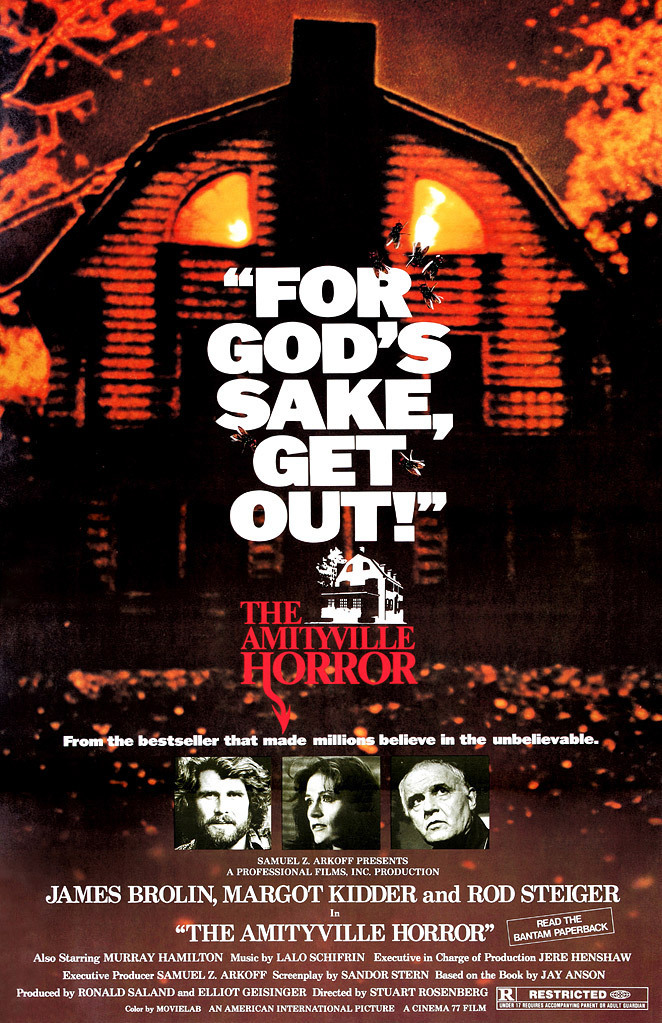
The Amityville Horror (1979)

amityville horror

Haunted House stories have to be some of the oldest examples of scary tales of horror. What’s scarier than the fear that resides right in your own home? Where can you find safety if not your own house? Where do we find much of our own horror but our own homes late at night with the creepy shadows and wind-blown creaky noises?

The Amityville Horror (1979) does a nice job of ratcheting up the spooks for about the first half but falters off towards the end.

Based on the book of the same name, which is supposedly based on true events, the story focuses on the Lutz family who just moved into a lovely old home that takes on some devious supernatural qualities. You see as the story begins we see that the family living in the home before the Lutz family were all brutally murdered in their sleep by one of their own. Even knowing this, the Lutz family buy the house for a bargain and move in because “houses don’t have memories.”

Houses it seems, not only have memories but have rotten dispositions too.

Strange things start to happen pretty immediately when the Lutz’s move in. The boathouse lights turn on and doors open in the middle of the night, the toilets get clogged with blood-looking ooze, and the priest who comes to bless the house (Rod Steiger) gets trapped in a room with a million flies and is told by a creepy voice to get out.

The film moves slowly towards its frights. This isn’t a film with a real live knife-wielding boogeyman ready to jump out and scare the family (and audience) at a moment’s notice. No, this film builds its horror with slow tension. Creepy things happen amongst the more mundane events of the family’s life. Between the scares we see the family unpacking boxes, attending weddings, taking boat rides, and chopping wood. Lots and lots of wood chopping.

Although amongst all of this in-between action, we hardly get to know the family at all. It is late in the film that it is revealed what George Lutz (a very hairy James Brolin) does. There is lots of talk about him needing to go back to work and all of these odd shots of the business van that only reveal that George owns his own business but strangely cut off the occupation. Eventually, it is revealed that he is a surveyor. And that’s how the whole movie is. We see a lot of the family doing things, but get no connection as to who they are as people.

Ultimately the slow build of tension fizzles out before it can really burst. This is the problem with making a haunted house picture. If there isn’t a ghost or phantom coming out of the walls, there is only so much horror a house itself can bring. Droves of flies, windows opening on their own, and chairs moving by themselves can build some tension, but without something bigger causing it all that’s left is a disappointment. In the end, all the filmmakers can muster is lots of heavy thunder and rain followed by a stairwell collapsing into a basement of blood. It’s just a house after all and that can be run away from.

Apparently, they followed the book pretty closely, and I’m not one to often ask for the creature behind the horror, but here it seems like they should have given us a little more. I can’t imagine the devil appearing for a final attack would have made the picture a great one, but it could have at least given a more adventurous ending.

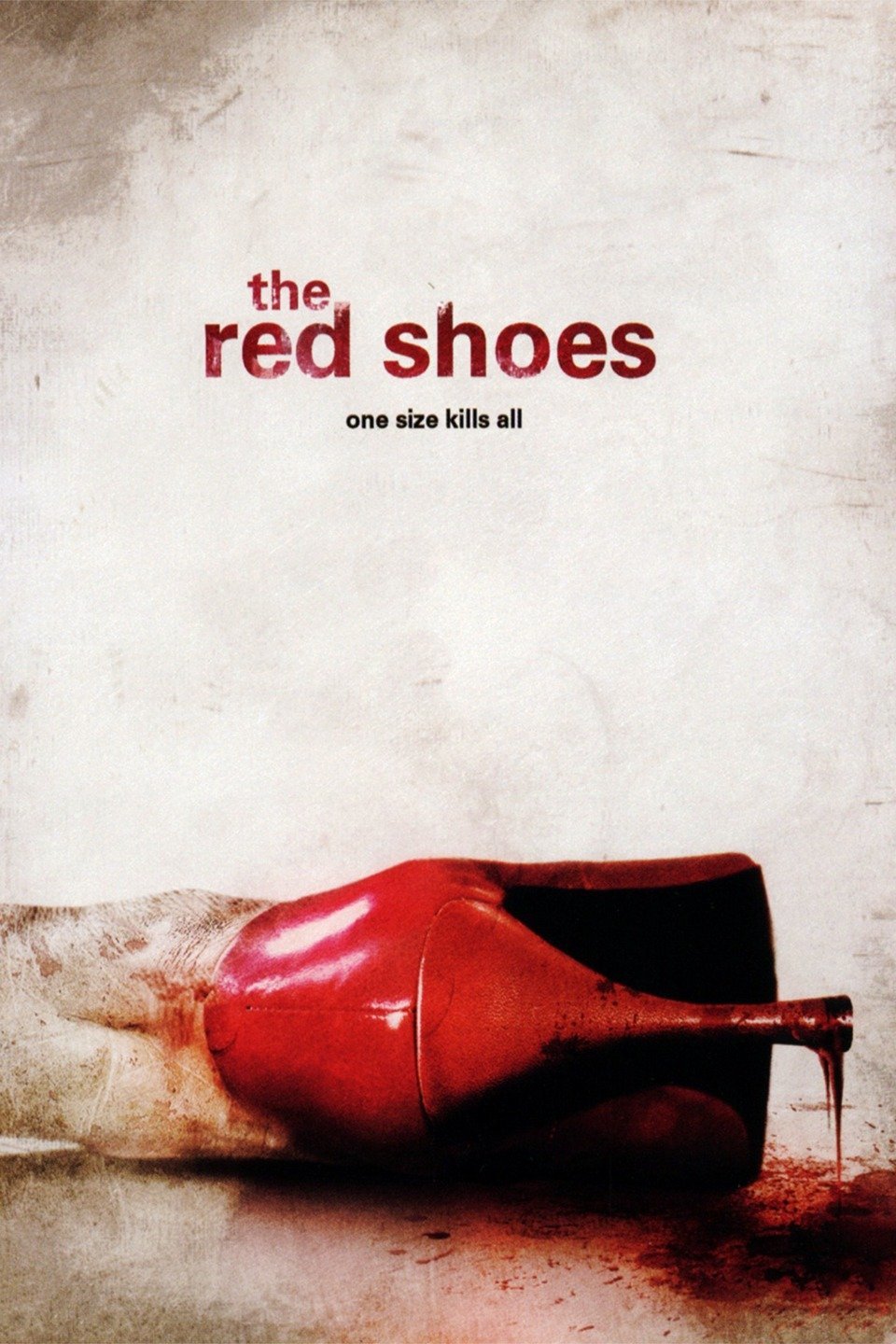
The Red Shoes (2005)

the red shoes

I suppose it is only natural that Asian horror should become as trite and bloated as its American counterparts. Eventually, they will most assuredly start aping themselves – mining their old material for what struck gold – and trying to recreate the old magic, only to fail miserably.

The Red Shoes isn’t as bad as all that, but it sure feels like a movie made upon audience testing and computer printouts of what has made the genre such a popular thing. It contains just about everything a good Asian horror movie should.

Inanimate objects that take on creepy spiritual significance? Check

A young child becomes enamored and endangered by said object? Check

Single mom recently divorced, living in a dilapidated and perhaps haunted apartment? Check.

Gruesome, unexplained murders? Check

Gruesome, unexplained murder that went unrevenged? Check

Long, black-haired

girl in desperate need of a chiropractor? Check

Buckets of blood? Double check.

Yet for all the textbook reasons why it should be an excellent creep-o-rama, it never really manages to pull itself off. At least part of the reason why Asian horror has become so successful both financially and artistically is that it managed to take a haggard genre and revitalize it with freshness. The Red Shoes does nothing new, but takes what has worked in the past and redoes it.

For all that, it’s not half bad. The production values are quite excellent and it does steal from some of the best horror movies this decade so I guess it would have to be pretty good. It’s the type of thing where had I not seen all of the films it rips off I’d probably have loved it.

Let’s slip into the plot for a moment. Sun-jae (Hye-su Kim) catches her boorish husband boinking some girl and decides to take herself and daughter Tae-su (Yeon-ah Park) away from the adulterer and they move into a run-down old apartment (did somebody say Dark Water?)

Later, Sun-jae finds a pair of pink shoes (I know the flick is called Red Shoes but the shoes are most definitely pink – this is either a bad translation or a literary device – they’re red because of all the blood! – get it?!?) and she takes the shoes home. Before she knows it she is attached to those shoes enough to get violently angry with anyone, including Tae-su who tries to touch them. (Inanimate object takes on spooky personality – did anyone see Ringu, the Ring, or the Ring Virus?)

Sun-jae’s friend gets a hankering for some pink –er red – shoes and steals them. Quickly she meets a bloody end. There are obligatory flashbacks showing why the shoes are now evil (I’ll only say the previous owner never got proper revenge, and so the shoe’s soul (get it?) must take that revenge on themselves.) Along the way, we get homages (or rip-offs) of The Eye, Ju-On, the Ring series, Dark Water, and just about every Asian horror film I’ve seen.

Like most Asian cinema the lighting is eerie and very well done. The acting hits all its cylinders and most of the production qualities are quite good. It just isn’t particularly original which makes it kind of a bore.

It’s just plain difficult to muster up any fear over a pair of pink heels. You might say the same thing over a television set, but for anyone who’s ever watched Mama’s Family you know that TV can be as scary as hell. But pink freaking shoes, there ain’t nothing horrifying about that, except maybe bad taste.

It is a good introductory film for Asian horror as it takes a lot of what works and applies it to one picture. But for anyone who has spent a good amount of time with Miike, Park, and Nakata, then the Red Shoes will feel a little too been there, done that.

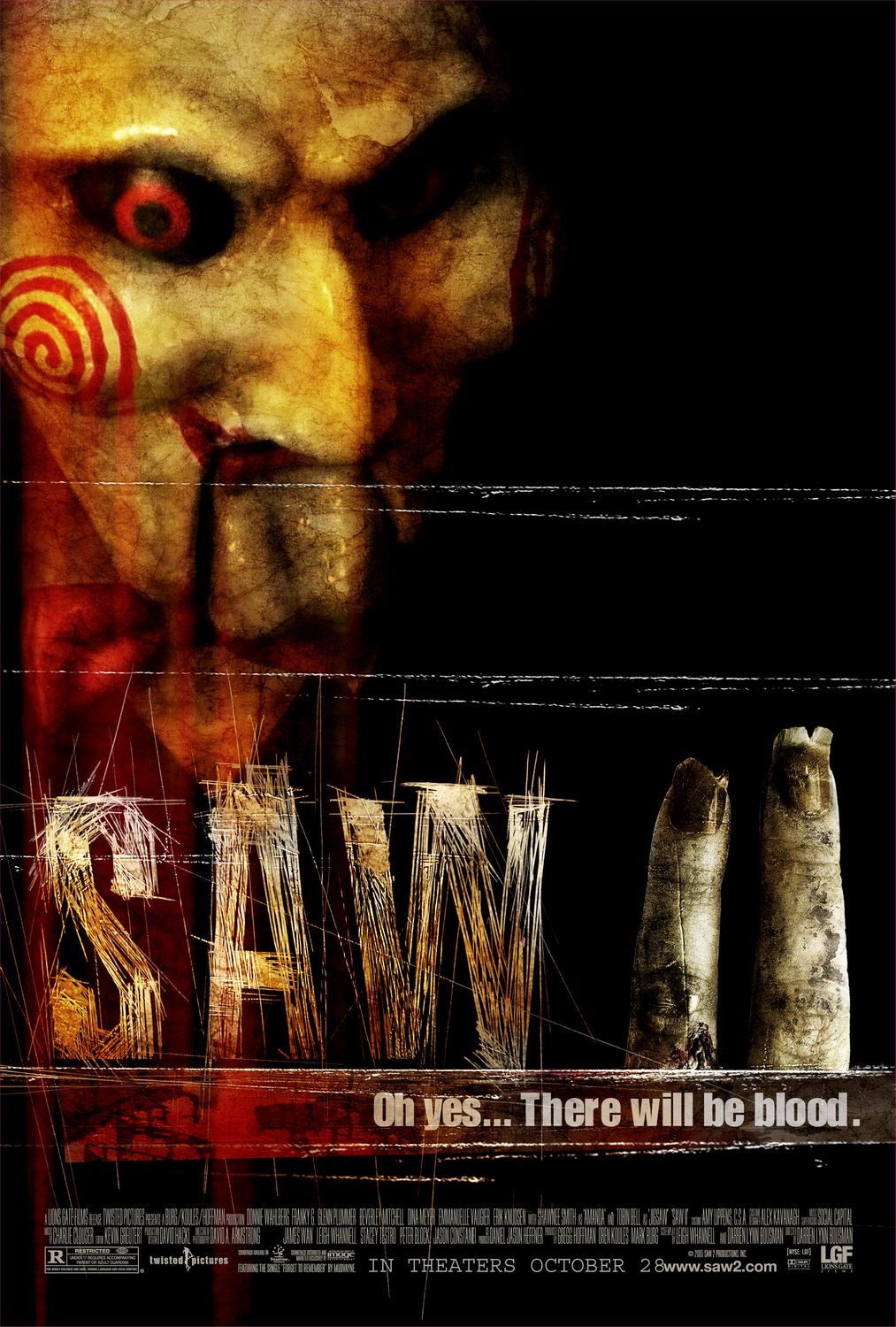
Saw II (2005)

saw 2 poster

In my writing, there is often a conflict between the rational, intelligent critic, and the overly joyous fan-boy. There are many films, albums, and books that I enjoy that don’t stand up under critical observation. They are unoriginal, contain poor craftsmanship, and are quite often unintelligent and stupid, but for whatever reason, I enjoy them immensely. The difficulty lies in trying to review said material that criticizes its quality while still exuding the joy it can give while still maintaining my credibility.

This is doubly true for horror films. Perhaps more than any genre, horror cinema sets expectations very low in terms of overall cinematic quality. With few exceptions, horror films aren’t really very good and garner very little positive critical response.

For every Night of the Living Dead, there are a dozen Return of the Living Dead Part IIs. For every Dracula there exists countless Embrace of the Vampires. Gremlins spawn Ghoulies. And so on and so forth.

I can’t in any serious way recommend any of the Friday the 13th pictures, but when they come on the USA network you will always find me sitting in front of the TV anticipating the next gory move by Jason.

There is probably a secondary question in here about why I (and so many others) enjoy high-impact gore as much as we do. What is it about gushing blood and guts that excites me in some weird cinematic way? But that is more discussion than I have room for now.

I rented Saw II not because I expected it to be good, or a fine piece of cinema, for I expected it to be worse than the first one, and it rather stunk. Rather I rented the film because I wanted to see some inventive death traps, lots of gore, and plenty of blood even if to get there I had to wade through insipid acting, glaring plot holes, and a story that would make my grandma blush.

I got what I expected.

For those who missed the original or its sequel, Saw refers to Jigsaw a crazed serial killer who sets up elaborate games and traps to kill his victims. The games are often so intricate that they would take weeks to set up and involve so many improbable circumstances that they could only be produced in the movies.

In the first film, we are given absolutely no motivation for the killings. In the sequel, we are given a very basic, and rather insipid back story that is supposed to serve as reasons a person would create such elaborate murders.

Here, instead of random killings, Jigsaw has kidnapped several people and thrown them into a house, a house filled with traps and deadly games. Like in previous killings the players find a tape recorder whereupon Jigsaw tells them that the iron gates trapping them inside the house will not be released until two hours are up. However, a deadly gas is being loosed into the house which will kill them all in one hour. The only way to survive is to locate syringes located throughout the house which contain an antidote.

There are also several syringes in a large safe whose combination can be surmised once the players figure out what they have in common.

One of the players is the son of a police officer. The police officer, Eric Matthews (Donnie Walberg) manages to quite easily find Jigsaw in his lair and begins a stand-off with him to release his son, whom they can watch via closed circuit TV.

That’s way too much plot synopsis for a film that lives and dies by its gruesome traps. In the director’s commentary (yes I did listen to a few minutes of it before getting bored) it is noted that they created specific traps for each of the house players, but as the screenplay progressed their characters wound up doing more damage to each other than the traps. Thus we only see a few of the original death traps.

Herein lies a big problem for the film. The first one was effective (and I’ll use that term mildly) because of its creative use of death. The excitement was in the interesting use of gore and thrill. In the sequel, they try to create tension by making the characters go after each other a la Night of the Living Dead. But they can’t muster nearly that kind of tension. The few traps that we do see aren’t all that interesting either. The trailer for the movie shows one of the more interesting ones – a gun is bolted to a door which goes off whenever the characters use a key to open the door – and even that isn’t all that fantastic. Gore-ridden yes, but it is not exactly super original.

Again in the original, most of the traps entailed the player having to do something horrible to get out. Characters sawed their own legs off to get out of chains or dug through a corpse to get a key, but here most of the traps are pretty straightforward killers. Like the gun door, none of the characters knew it was a trap, there was no recording asking the character to do something to avoid getting shot in the head, it simply happened.

Perhaps asking a horror film to be intelligent, well acted, and actually scary is asking to much. Perhaps expecting the sequel to a mostly rotten gore-fest to be better than the original is expecting a miracle.

In the end, Saw II was a decent way to pass the time. No, there wasn’t anything to take away from the film, no revelations or interesting filmatic choices. But then again it isn’t meant to be. It made me squirm a little bit and be grossed out by the blood. And maybe that’s enough. Maybe

29 Palms (2002)

29 palms

About 3/4ths of the way through 29 Palms an inept security guard (Jon Polito) says, “Nobody thought I’d do that, did they?” In a way, this line could sum up the entire plot structure of the film, for it seems the filmmakers want nothing more than to surprise the viewer at every turn. They seem to be wearing a smirking smile knowing they are coming up with something different, something no one would expect. Yet, in spite of all the twists, turns, and quirkiness, it all feels like something I’ve seen before.

It is as if, while attending film school all of the filmmakers heard over and over again to avoid clichés and then skipped class the day originality was discussed. As if the avoidance of redundancy is all that it takes to be interesting.

To say something nice, it is filled with lots of great character actors like Michael Lerner, Michael Rapaport, and Jeremy Davies and they do manage to rise above the lackluster material.

Barely.

Davies plays an unnamed drifter who starts the film as a clerk for a corrupt judge (Michael Lerner) and may or may not be an FBI agent. The judge is about to make an important decision on whether or not an Indian Casino can expand. The judge hips the Native Americans onto the drifter and they promptly kill his girlfriend. A hired killer (Chris O’Donnell) is turned loose to do the same to the drifter.

The killer contract includes a bag of money and a severed hand (which is apparently from an enemy of the Native Americans and is to be used to frame someone, but it’s all fairly vague and unclear.)

The inept security guard steals the bag which is in turn stolen by a corrupt cop (Michael Rapaport) and then again stolen by the drifter (who somehow knows about the bag, though this too is also vague and unclear).

The remainder of the film centers on all of these characters (and more!) trying to get their hands on the bag. There are quite a few plot turns and the characters are all quirky and indie-friendly, but honestly, by the midpoint I stopped caring enough to write it all down.

If the filmmakers had stopped trying to make everything so original and quirky for a second and worked on their stories, and maybe developed a couple of their oddball characters, it might have worked. But instead, we get a film that may be “different” but it never makes me interested enough to care.

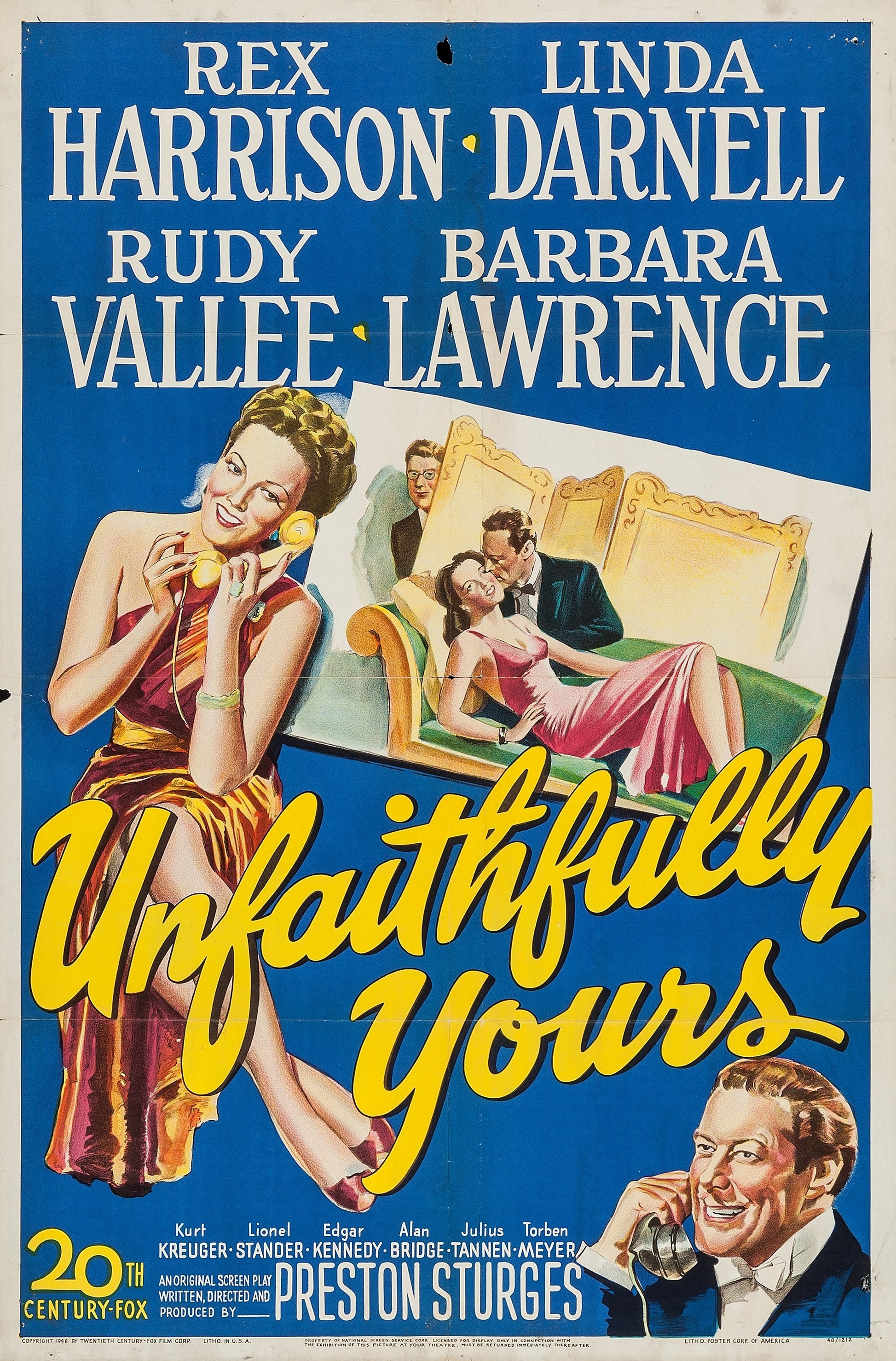
Unfaithfully Yours (1948)

unfaithfully yours

While trying to explain the type of film we were about to watch to my in-laws, my wife said it was a Rex Harrison film. I immediately began thinking that I would explain that it was a Preston Sturges film, starring Rex Harrison. Not really much difference there, when you think about it, especially since the in-laws have probably never heard of Preston Sturges or Rex Harrison, not being much for film watching.

It’s not that they are opposed to film, but rather they don’t ever go to watch movies, being too expensive, or read up on them, or study weekend grosses or any such thing. They don’t really go to rent them either. They are just not that type of folk.

I mean they still watch regular TV, no cable or satellite, and still use the internet via dial-up. They only have a DVD player because I bought them one, and only then because I was tired of watching the same old VHS tapes when we came down. And that’s just it, when we come down we watch movies, and they enjoy them. So, they aren’t opposed to movie watching, they just don’t go about seeking them out.

Anyways, I would have said it was a Preston Sturges film because when I think about movies I think more about directors than stars. Directors, it seems to me, have more of an effect on the final outcome of a film than an actor. If I had to choose, I’d go for a film with a bad actor and a great director, then a great actor and a bad director. Odds are a director can elevate a bad actor’s performance, more than an actor will elevate bad direction.

This isn’t always true, especially in older films, say starring Humphrey Bogart. I might be able to tell you who directed Casablanca if I thought about it (it’s Michael Curtiz right?) and I know that Howard Hawks directed The Big Sleep and John Huston did the Maltese Falcon. But still all of those pictures, and pretty much everything starring Humphrey Bogart is a Bogart picture to me.

This is all a convoluted way to say that I picked up a copy of Unfaithfully Yours at the library (man you’ve got to love a public library with a massive collection of excellent films) on the basis that it was a Preston Sturges film. Really, I only know Sturges because of the Coen Brothers. Their hilarious film, O’Brother, Where Art Thou? Gets its title from Sturges’s film, Sullivan’s Travels. Loving the brothers Coen and wanting to see their inspiration I rented Sullivan’s Travels and found it to be beautiful.

Preston Sturges is now on my list of directors to watch.

Unfaithfully Yours is an odd little picture. It starts out like a fast-paced comedy in the style of Bringing up Baby or His Girl Friday and then heads into surrealistic art territory before slipping over to a slapstick farce.

The plotting involves Rex Harrison starring as a celebrated English conductor, Sir Alfred De Carter, living in New York with his beautiful bride. Things are going pretty well for the old man, too. He has fame, fortune, success at something he loves, and a beautiful woman to fawn over. Sure he must put up with his petulant brother-in-law, but he’s got his wits and they are enough to take care of him.

Things turn upside down after he gets back from a trip abroad and finds out that when he told his brother-in-law to “look after” his wife, he was taken quite literally. The brother-in-law hired a private detective to look after the wife and the detective found out a few things. Mainly, that said wife spent some time in her negligee late one evening in Sir Alfred’s secretary’s bedroom.

This information naturally outrages Sir Alfred and moves our film into the surreal. During an evening concert, Sir Alfred begins to fantasize about what he will do. The camera moves into his eyeball, and into his mind.

Three fantasies of revenge, remorse, and self-loathing play out during the course of three songs that the actual Sir Alfred is conducting. During the interlude between each song, the real audience goes mad as if the music performed is the best Sir Alfred has ever conducted. Giving us some commentary on the passions and art.

When the concert is over, Sir Alfred rushes home to implement his first, and most devious fantasy – that of killing his wife and framing his secretary. But all does not go as well as the fantasy and we move into the final act, which is pure slapstick.

Nothing goes right for poor Sir Alfred, he cannot find anything, breaks everything, and is too inept to work a recording machine.  It is all perfectly paced and consists of the funniest parts of the movie.

In the end, misunderstandings are worked out and everything becomes a happy ending.

Unfaithfully Yours is an odd little film and not for everyone, as can be seen from a fairly dismal box office at the time of its release. The ever-changing tone of the film may turn some people off, but for those willing to stick it through and enjoy a film that is experimental but well made, the payoff is worth it.

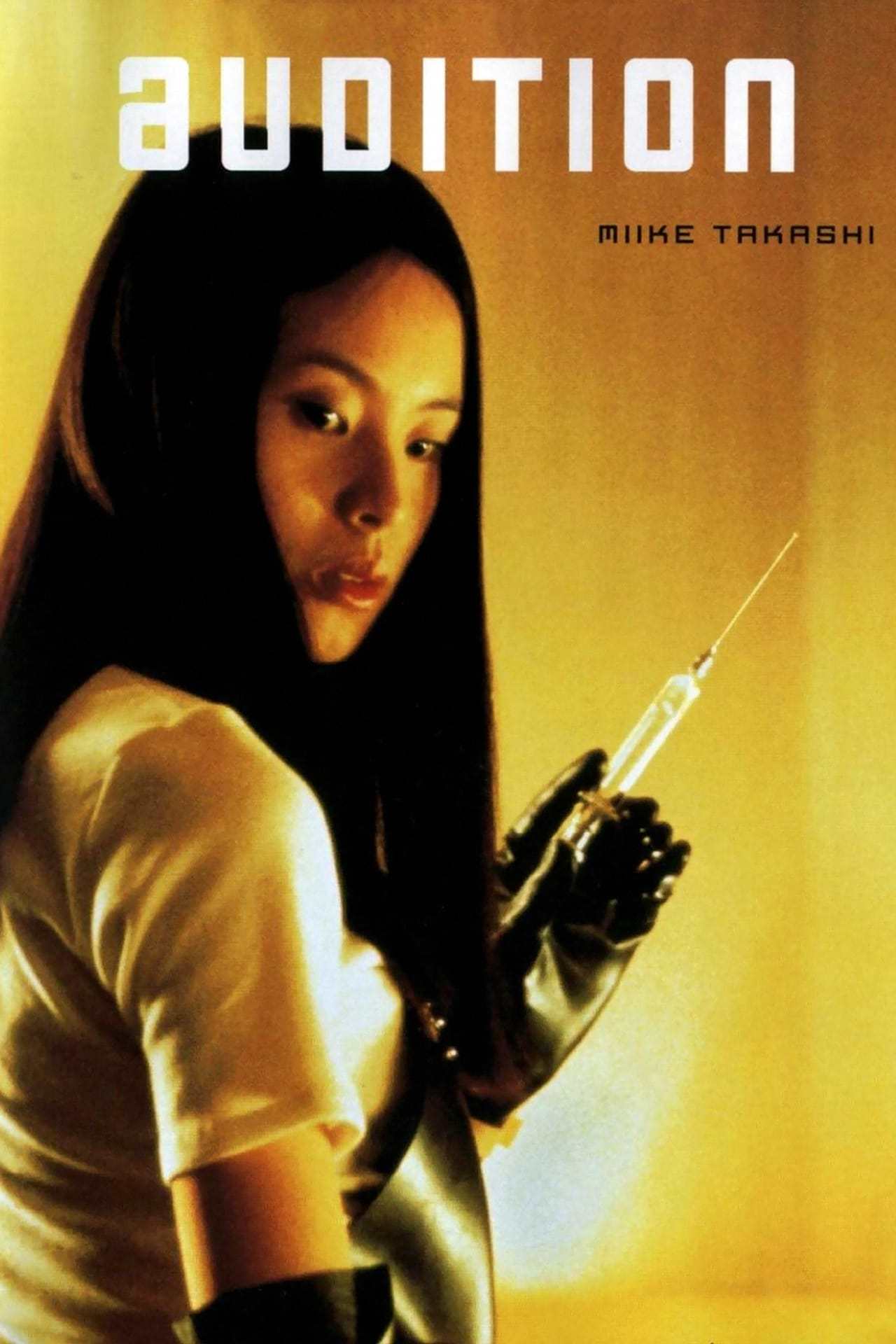
Audition (1999)

audition poster

Audition is a peculiar type of horror film. It is not the violent, gorefest that you might expect from the new stream of Japanese horror films, and certainly not from Takashi Miike, director of such bloodfests as Ichi the Killer and Full Metal Yakuza. It is also not the suspenseful, scare them with what you don’t see the type of horror film that Alfred Hitchcock might make.

In fact, for the first 2/3s of the movie, it is more akin to a family drama than anything you’d call horror. The plot concerns a middle-aged widow, Aoyama (Ryo Ishibashi), who is encouraged by his teenage son to start dating again. Not knowing how to go about this, he decides to hold auditions for his new wife. Real-life auditions, like you, ’d do in hiring actors for a movie.

Lots of women show up and are interviewed for the lifelong role of wife. Aoyama is intrigued by one woman, Yamazaki (Eihi Shiina), and begins to date her. Eventually, we find that Yamazaki is not all who she seems to be and thus the horror begins.

Miike’s ability to turn the conventions of an old romantic formula completely on its head is nothing short of masterful. Watching the first thirty minutes or so of the film, you would have no idea that horrible, bloody things were going to take place later on. Had I not known what to expect from a Miike film, I would have thought I was watching an old-style romance.

Yamazaki at first seems like a natural mate, she is beautiful, sweet, and shy. Miike lets the twist in her character come in slow, short, and shocking bursts. The screw tightens and the horror grows.

The gore is actually pretty minimal, but when the horror comes it comes quick and merciless.

Asian extreme horror is not for everybody. The blood and the gore are too much for a wide audience. But for those with the proper stomachs, Takashi Miike is a master and Audition is one of his best.