Last Weekends Pickups

photo of some books and dvds

We hit up a couple of second-hand shops last weekend and I got some good stuff.

The Retaliators was actually something that arrived randomly in my mailbox. Normally the review material I get for Cinema Sentries comes by request, but every now and again PR people will just send me random stuff in hopes I’ll cover it. I did write a review of this one and you can read it here.

Batman is probably my favorite comic book character (although I might also say that of the X-men). I’ve read more of his comics than any other line. Knightfall introduces Bane as an enemy and he immediately makes things interesting by opening Arkham Asylum up, releasing most of Batman’s Rogues Gallery onto the city. I’m about 1/3rd of the way through the book right now and so far I’m loving it.

Sometime in the late 1990s the American Film Institute released its top 100 list of the best American movies ever made. They did a big television show about it with lots of cool talking heads discussing why those movies were chosen.

I was in college at the time and just becoming a true cinephile so that show was like catnip to me. It introduced me to all sorts of films I’d never heard of. I printed out the list and began seeking out as many of those films as I could find and watching them.

Yankee Doodle Dandy came in at number 100 and it is one of the few films from that list that I still haven’t seen. I found it on sale for $1 and figured it would make a good blind buy.

Sports Night was the first TV series created and run by Aaron Sorkin. It isn’t as good as The West Wing but it has a lot of that show’s DNA in it. There is lots of great, sparkling dialogue and the actors are just wonderful. I’m not a sports guy but I still like this.

I think I’ve mentioned my love of Maigret, the great detective created by Georges Simenon before. Every time I go to a used bookstore I always look for more books from him. This time I found two.

What have you picked up lately?
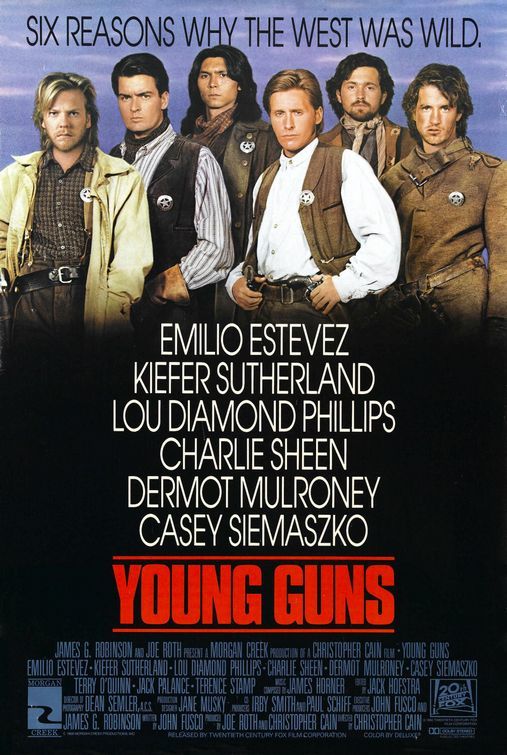
Westerns in March: Young Guns (1988)

young guns movie poster

I was 12 or 13 when I first watched Young Guns. I can’t remember now if that first watch was in the theater or when it came out on VHS tape. Wherever it was, I loved it. I watched it many times after that first viewing as a young teen and even into my college years. It was probably the first western I ever watched. Me and my friends endlessly quoted it.

I remember my uncle, who was a huge western fan (he used to always tell us that we liked westerns too – because Star Wars was just a western in space) did not like Young Guns. He didn’t like it because it wasn’t historically accurate and it portrayed Billy the Kid as a hero and he was really an outlaw and a vicious killer.

At some point, I stopped watching it. Never intentionally, I don’t think, just one of those things. I bought it and the sequel on DVD but let it gather dust on my shelves. Somewhere in my cinephile film snob years I did rewatch them both and decided they were bad, that they were not good movies.

But this being Westerns in March month I decided to dust it off and give it another try. On a technical level, it isn’t great, but it is still a pretty fun ride.

My uncle was wrong. It is surprisingly historically accurate. At least on a plot level. Billy the Kid was taken in by John Tunstall and his regulators. Tunstall was murdered by the Murphy gang and this did cause a war between the two factions. The regulators were deputized for a time and then became outlaws. I’m not a historian and I’m sure there are any number of embellishments, but from what I’ve read it gets the basic story right.

The movie mostly comes from Billy’s point of view which naturally makes us root for him, and Emilio Estevez is too charming an actor to make him a villain. But it doesn’t shy away from his ruthlessness. When Billy and the regulators become deputies and are supposed to arrest the men responsible for Tunstall’s murder, Billy gets his revenge in blood. At one point he shoots a man at point-blank range and the camera moves in close to Charlie Sheen’s face (he plays Billy’s compatriot) as the dead man’s blood splatters all over it. Billy often seems unhinged and takes great glee in violence (his friends periodically note that he seems quite crazy).

As a teenager, I overlooked these things and will admit to finding him heroic. But watching the movie now I recognize the film doesn’t look away from his violent tendencies.

It is avery 1980s western. Some call it the Brat Pack western as it stars the aforementioned Emilio Estevez and Charlie Sheen, plus Lou Diamond Phillips, Keifer Sutherland, and Dermot Mulroney. The soundtrack is filled with synthesizers and big guitars, and there are some bright filters used in the credit sequence. All of this feels quite dated and the writing doesn’t do it any favors (though it is quite quotable.)

So I guess I’ve come full circle on it. I loved it as a teenager, hated it as a younger adult and now I can recognize its flaws but also appreciate it as an enjoyable entertainment.

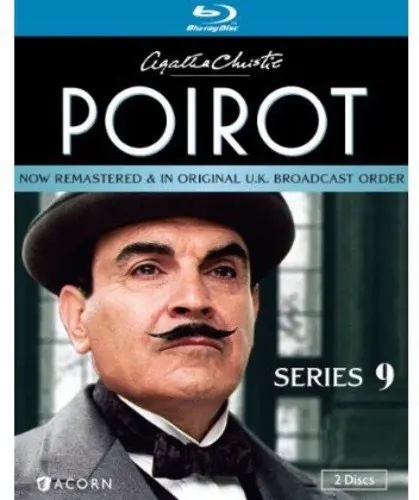
Poirot: Series 9

poirot series 9 blu-ray

I love a good cozy television mystery. There is something comforting about sitting down on the couch and watching a smart detective solve a murder week after week, episode after episode.

I’m not actually the biggest Agatha Christie fan, at least not in terms of actually reading her actual books. But I do enjoy many of the films and television series that have been based upon her works, and Poirot, the BBC series starring David Suchet is one of the best.

Suchet so perfectly embodies the Belgian detective I find it difficult watching anybody else play the role now I’m pretty sure Series 9 was the first time I really sat down and watched this series. It was definitely the first time I ever reviewed one (I’ve reviewed a few others since then.)

You can read that review here.

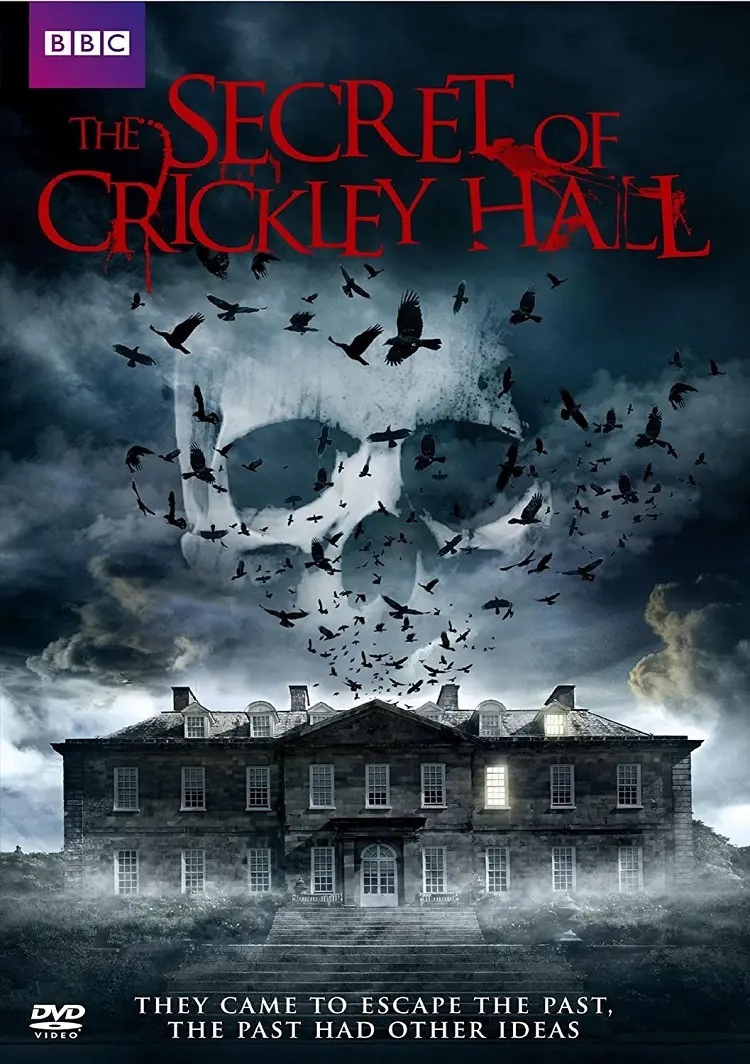
The Secret of Crickley Hall (2012)

the secret of crickley hall poster

As I’m slowly making my way through all the reviews I’ve written for Cinema Sentries I regularly find movies and television series that I have only the vaguest memories of ever watching. This is one of those things. I watched The Secret of Crickley Hall and reviewed it back in 2013, nearly 10 years ago. That in itself kind of blows my mind. I have a very fuzzy memory of receiving the DVDs for this, but I could not tell you the first thing about it.

Reading my review it seems I didn’t really like this series. It also makes me scratch my head because I begin with an admission that I don’t like ghost stories, and I love ghost stories. I don’t know what I was thinking when I wrote that. I also didn’t know who Suranne Jones was at the time and I’ve since come to admire her as an actress (she’s fantastic in Scott & Bailey).

Anyway, you can read my thoughts about it from ten years ago here.

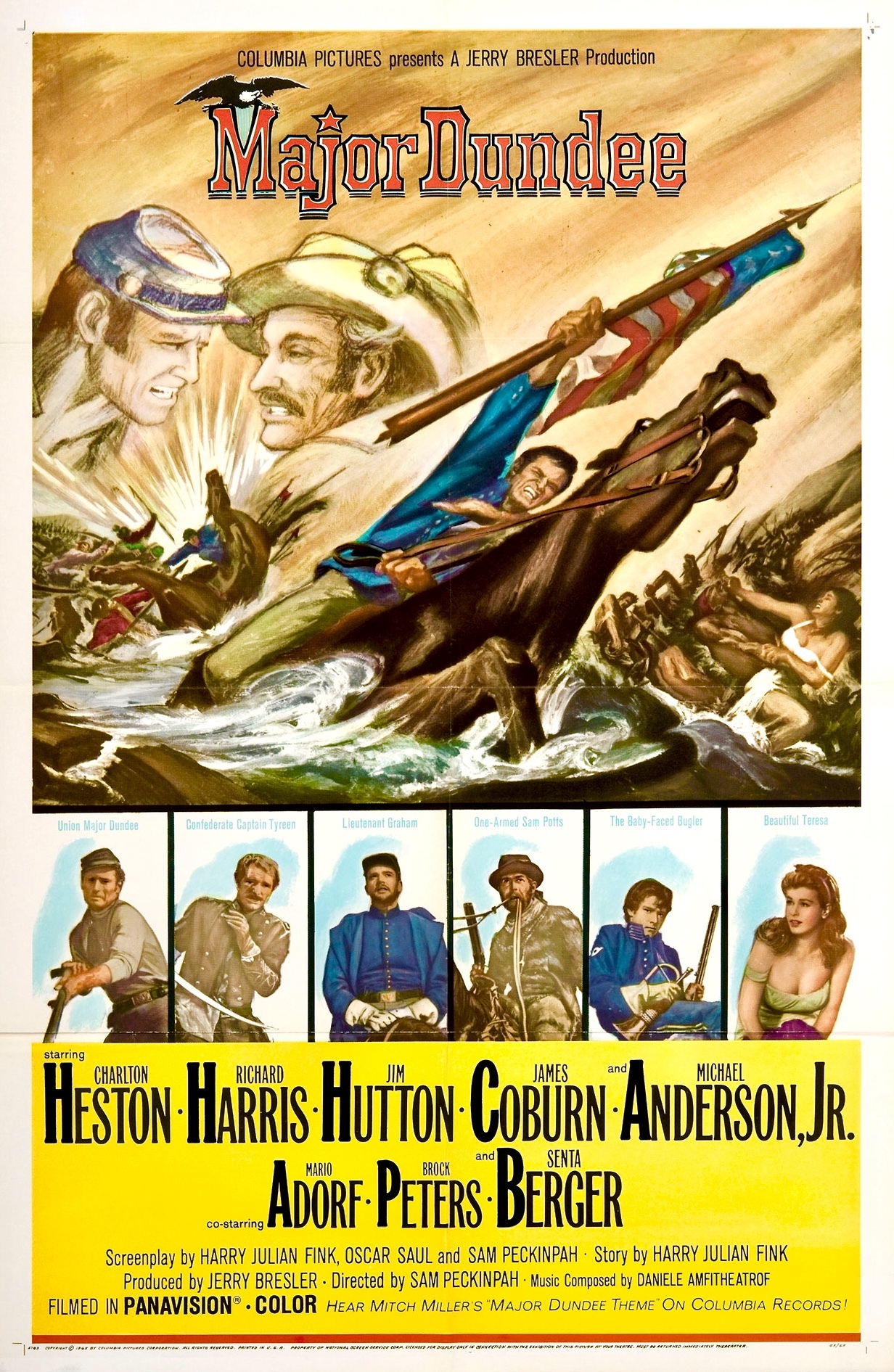
Westerns in March: Major Dundee (1965)

major dundee poster

Made between his more traditional western Ride the High Country (1962) and his revisionist one The Wild Bunch (1969) Sam Peckinpah’s Major Dundee works as a kind of bridge between the two styles.

It stars Charlton Heston as Major Dundee a Union officer who is relieved of his command and transferred to run a prisoner-of-war camp in New Mexico territory. When an Apache war chief slaughters a family of ranchers and steals their children Dundee gathers a rag-tag group of soldiers, Confederate prisoners, thieves, drunks, and a small group of black soldiers to hunt him down.

They say Peckinpah was drunk for most of the shooting causing all sorts of difficulties with the studio and with Heston (rumors have it Heston once threatened the director with a saber). His original cut was over 4 hours long, the studio took control of the film after that and knocked it down to just over two hours. Some of that has since been restored but the bulk of the “director’s cut” is now lost to history.

What’s left is a bit of a mess, but there is enough there to make it worth watching.

The film is less interested in what normally would be the main story – that of these men going after the Apache – and more interested in the rivalry between Dundee and Captain Tyreen (Richard Harris) an Englishman turned Confederate officer. The two have a history together and Dundee can’t understand why Tyreen would betray his country in this war, and Tyreen can’t fathom how Dundee would raise up arms against people he knows, his friends and family members.

Tyreen regularly tells Dundee that once they’ve captured or killed the Apache he’s gonna turn his sights onto him. Dundee says he’ll be ready for it and the two square off throughout the film while maintaining an uneasy alliance.

There is a version of this film in which Dundee is a megalomaniac in the vein of Captain Ahab, hell-bent on his mission all other considerations be damned. From what I’ve read that is exactly what Peckinpah was reaching for. But Heston is too likable an actor to make that come across. His version of Major Dundee comes across as a decent officer, trying to make the best of a difficult command.

In the end, the film never quite satisfies. Oh, it is watchable enough. Peckinpah is too good a filmmaker not to make things unwatchable, even when he is half in the bag. Heston does some of his best work here, too. But it never coheres into something truly good. One wonders what that 4 hours version would have been like. If Peckinpah’s original film was an epic masterpiece or an incoherent mess.

We’ll probably never know. What we’re left with feels like an interesting transitional film for the director. One where he’s leaving behind the influences of classic western auteurs like John Ford and Howard Hawks and creating something new and modern. But he’s not quite there yet.

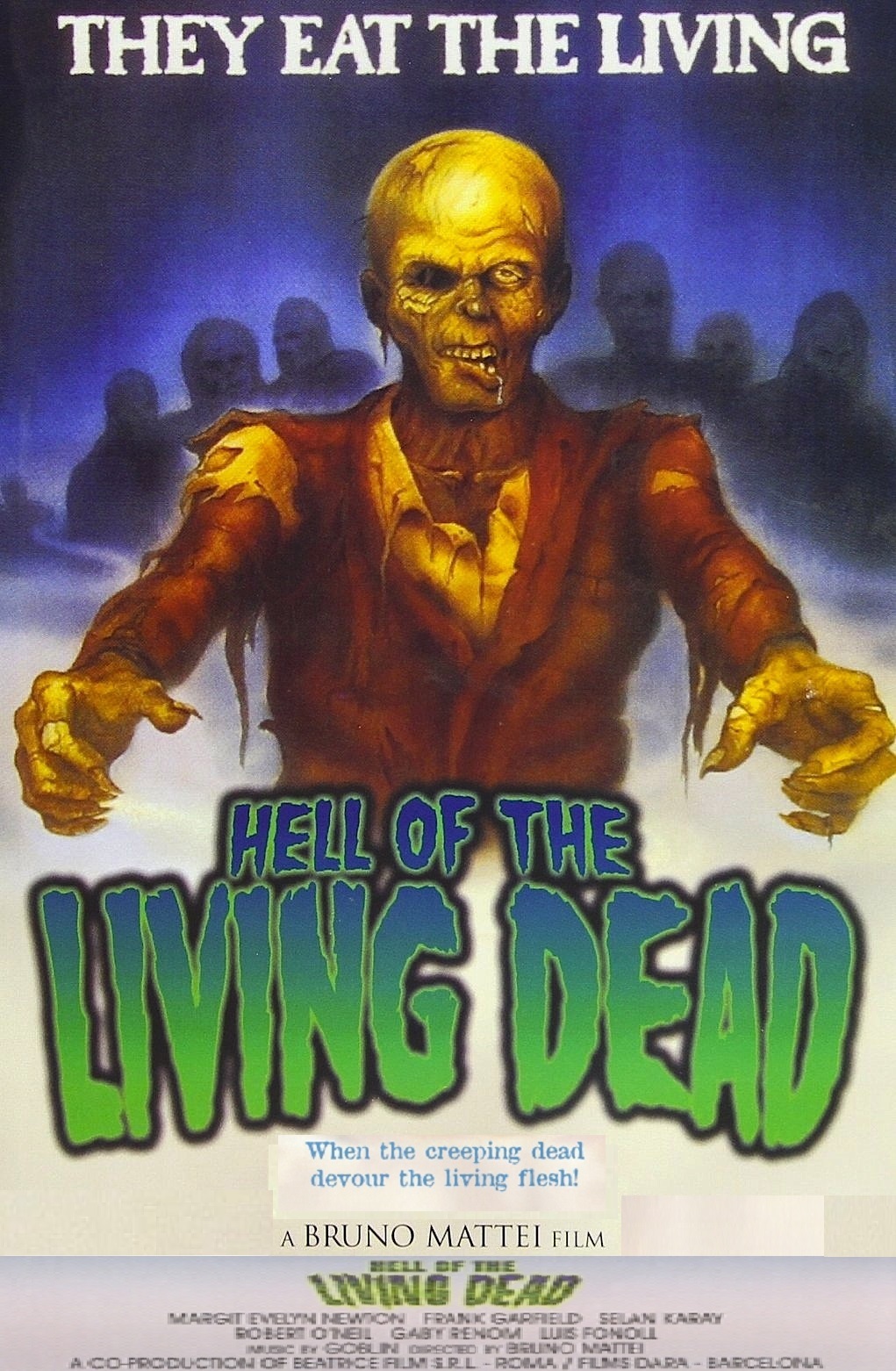
The Friday Night Horror Movie: Hell of the Living Dead (1980)

hell of the living dead poster

George A. Romero’s Dawn of the Dead (1978) was a huge international success. It made over $1 million in Italy alone. In 1979 Lucio Fulci made an unofficial sequel, Zombi 2 (Dawn was titled Zombi in Italy). It was quite successful as well and for the next few years, the Italians began churning out one zombie film after another.

In 1980 Bruno Mattei got into the game with Hell of the Living Dead, aka Virus, aka Night of the Zombies, aka Zombie Creeping Flesh, aka half a dozen other things. It is, well it is a mess, but kind of a glorious, ridiculous, god-awful mess. It’s also a lot of fun in a late-night weekend kind of way.

The plot, such as it is, involves a research facility in Papua New Guinea that accidentally releases an experimental gas called “Operation Sweet Death” which turns the recently deceased into flesh-eating monsters.

The government sends in an elite SWAT team to take care of business. Along the way they run into two reporters and together, they make their way through the jungle, battling hordes of monsters, to the research facility to…well it’s never exactly clear what their ultimate goal is, but there sure takes a lot of gore-filled violence to get there.

Most of the plot makes very little sense. The dubbed dialogue is hilariously bad, and the acting is atrocious. There is a ton of very obvious stock footage of animals and natives thrown in to boost the run time. The score is by the very excellent band Goblin, but all of it is recycled from various other films.

The characters make ridiculous decisions after ridiculous decisions. Though early on they figure out the only way to kill the zombies is to shoot them in the head, they constantly shoot them everywhere but the brain pan. One guy liked to taunt them and dance around them for some reason. Whenever a zombie attacks the other characters literally just stand there for the longest time watching them eat their friends until finally decide to act. Etc,. etc.

I’ve seen a lot of bad horror movies. I’ve seen a lot of bad zombie movies. This is one of the worst ones I’ve ever seen. And yet, under the right circumstance, in the right mood this film kind of works.

Links of the Day: March 9, 2023

50 Years Ago Today (yesterday) – Ron “Pigpen” McKernan Of The Grateful Dead Dies At Age 27 – Glide Magazine

Page McConnell & Trey Anastasio to release new album this Friday; share first song today: Grateful Web

Wilco’s Jeff Tweedy talks addiction, art, and his favorite life lessons: The 1A

Review: Willie Nelson Revels in Classic Context: American Songwriter

Dead & Company to play Cornell University concert on Grateful Dead anniversary: Syracuse

Owsley’s Picks: Grateful Dead Preps ‘Bear’s Choice’ 50th Anniversary Reissue: Jambase

Van Morrison – Moving on Skiffle: The Arts Desk

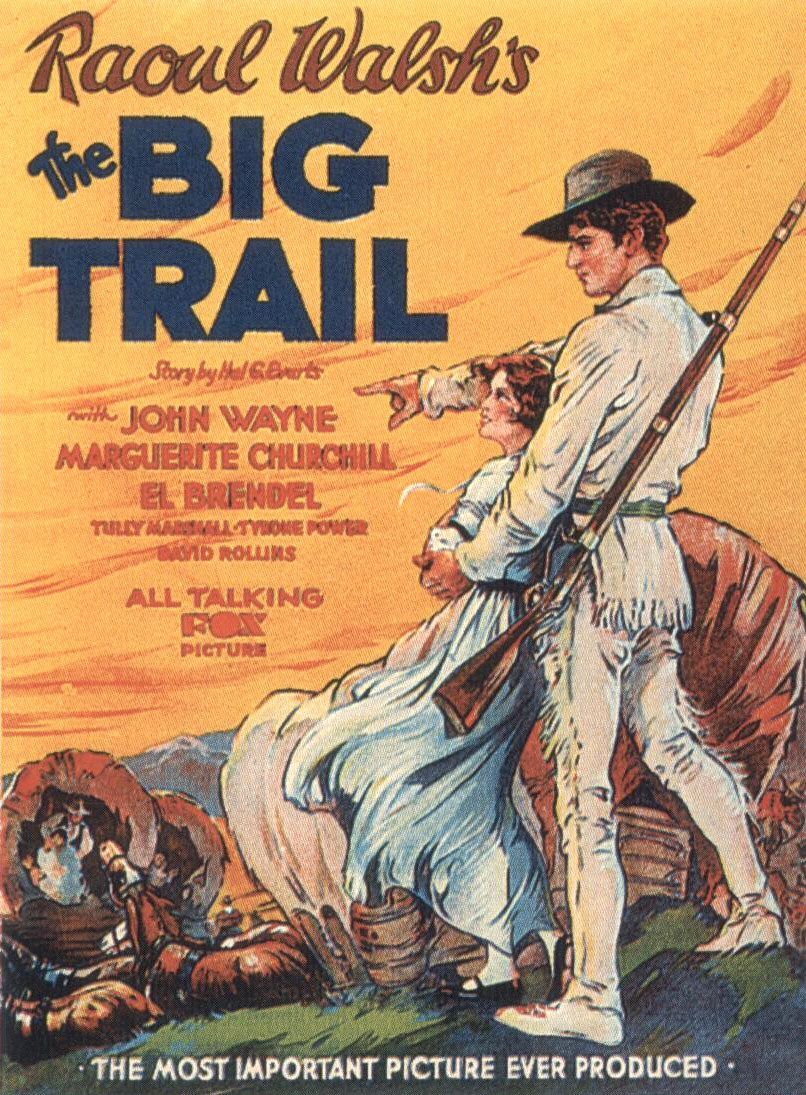
Westerns In March: The Big Trail (1930)

the big trail poster

John Wayne started his movie career as a prop boy. He was given numerous roles as an extra, mostly by John Ford, before landing his first starring role in Raoul Walsh’s The Big Trail. The film was a box office flop and Wayne would fritter away for the next decade making poverty row westerns until John Ford put him in Stagecoach (1940) and made him a star.

The Big Trail is epic in every conceivable way (which makes it all the more astounding they were willing to put the unknown Wayne in as the lead). It was shot on a new 70mm film process called Grandeur. Filming took place over four months in seven different states. He hired over 700 Indians from five different tribes and used some 185 wagons, 1,800 cows, 1,400 horses, 500 buffalos, and 700 chickens, pigs, and dogs in the production.

I can’t imagine what it would have been like to have seen it on the big screen in glorious 70mm. Most people can’t because it was only shown that way in a few theaters. For proper viewing, theaters needed to upgrade their screens and most were unwilling to do so having just spent a small fortune upgrading for sound. The 70mm print was nearly lost to time, but the original negative was lovingly restored in the 1980s.

Watching it on the small screen is still a sight to behold. Walsh makes every use out of the grand scale. The plot, about a caravan of settlers crossing the Oregon Trail, allows for great use of the widescreen format. We see hundreds of settlers on horses, oxen and in wagons rolling across the land, the camera shooting from far off allowing us to see the American west in all of its glory.

There is a scene in which the settlers must cross a river. The rapids rage and horses and pushed downriver like little plastic toys. Wagons lose their footing and are rushed downstream while men desperately try to rescue the women and children on board.

Another scene has the settlers lowering themselves, their cattle, and their wagons by rope down a steep cliff. Once again the camera sits back showing us the massive scope of this endeavor.

But even in smaller scenes, Walsh makes use of this new format. The film begins on the banks of the Mississippi River. A scene will involve a few people talking in the foreground, but behind them, the camera shows a mass of humans, animals, buildings, and ships going about their business. Interior scenes leave a door or window open allowing a steady stream of traffic to mingle about just outside. There must have been a dozen people hired just to handle all the extras.

Unfortunately, the plot doesn’t quite live up to the filmmaking. The main story, that of the settlers traveling west is good. It really demonstrates just how harrowing and difficult that trip must have been.

But the b-stories are not particularly interesting. Wayne plays Breck Coleman who is hired on as a scout for the caravan. He agrees to the trip because he believes that the man hired to lead the caravan, Red Flack (Tyrone Power, Sr.), and his companion Lopez (Charles Stevens) murdered his friend and stole his wolf furs. But this story never creates any real tension. Power is enjoyable in the role, but I was never really interested in the outcome of their battle. Marguerite Churchill is the love interest, but the two fail to sizzle.

Wayne is good. And young. And surprisingly beautiful. He has the walk and some of the talk, but the swagger isn’t quite there. He’s a young man looking for fame and glory, not the older man I’m used to seeing who already has it.

Ultimately, the film is an odd mix of a sometimes rather dull plot mixed with some remarkable filmmaking and stunning visuals. The latter absolutely make the former worth sitting through.